
In short
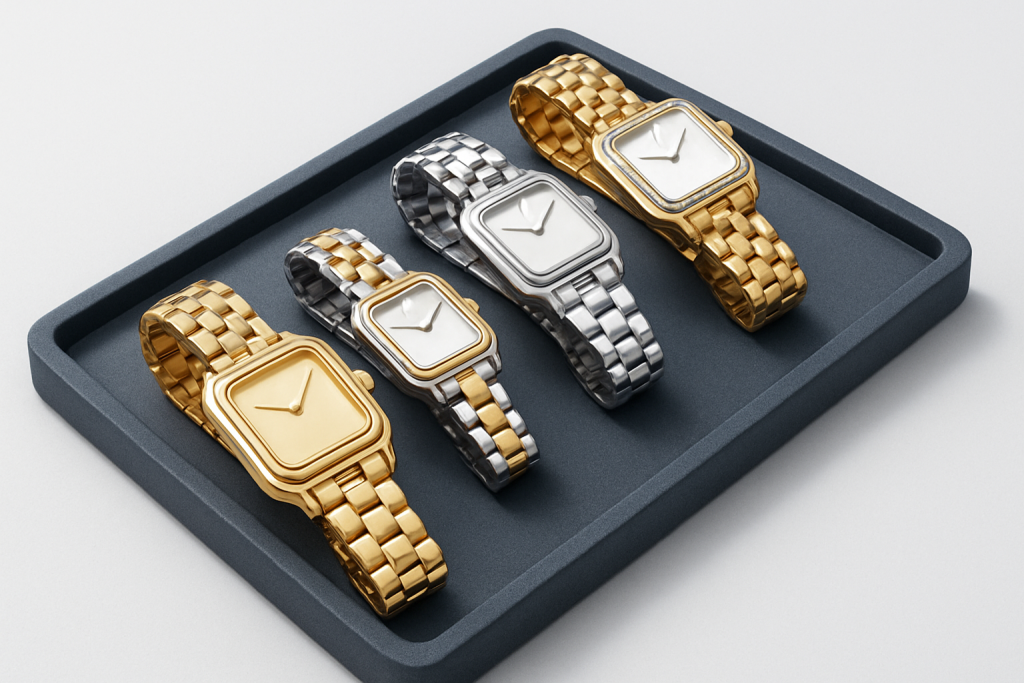
The Cartier Panthère watch is easiest to choose by treating size and material as separate decisions. Mini is jewelry-first, small is the safest classic fit, medium improves readability, and large adds strong wrist presence; steel is the practical entry point, two-tone adds warmth, and full gold or diamonds makes the watch distinctly jewelry-led.
Key takeaways
- Current core Panthère sizes measure approximately 25.15 × 18.51 mm for mini, 30.3 × 22.0 mm for small, 36.5 × 26.7 mm for medium and 42.0 × 31.0 mm for large.
- Small is the strongest general-purpose starting point; mini looks more like jewelry, while medium and large increase dial presence and readability.
- A 2026 capture of Cartier's US Panthère collection showed selected steel models from $4,300 to $6,700 and selected yellow-gold models from $23,800 to $34,100.
- The recognizable current configurations use quartz movements and carry a stated water-resistance rating of 3 bar, although the exact reference must always be checked.
- A dealer listing should identify the reference, dimensions, metal, diamond setting, bracelet length, condition, service history and seller terms.
Table of contents
- Which Cartier Panthère size should you choose?
- Which Cartier Panthère material fits how you will wear it?
- What does a Cartier Panthère watch cost in 2026?
- What should a gift buyer decide before ordering?
- What should you check in a Cartier Panthère listing?
- What else do buyers ask about the Cartier Panthère watch?
- Where can you browse Cartier Panthère listings?
Cartier describes the Panthère as a watch and a piece of jewelry, first designed in the 1980s and named for its highly flexible bracelet. The familiar formula combines a slim rounded-square case, Roman-numeral dial, sword-shaped hands and a close-link bracelet that supplies much of the watch's visual identity. The current Panthère collection continues that formula across several sizes and materials.
The core Panthère is a two-hand quartz watch rather than a movement-led collector proposition. The useful buying questions are therefore concrete: How large should it look, which metal suits the wearer, and does a particular listing match the reference it claims to be?
Which Cartier Panthère size should you choose?
Choose the size by comparing case width and desired wrist presence, not by relying on the words mini, small or medium alone. Mini and small preserve the strongest jewelry effect, while medium and large provide more dial area and a bolder outline.
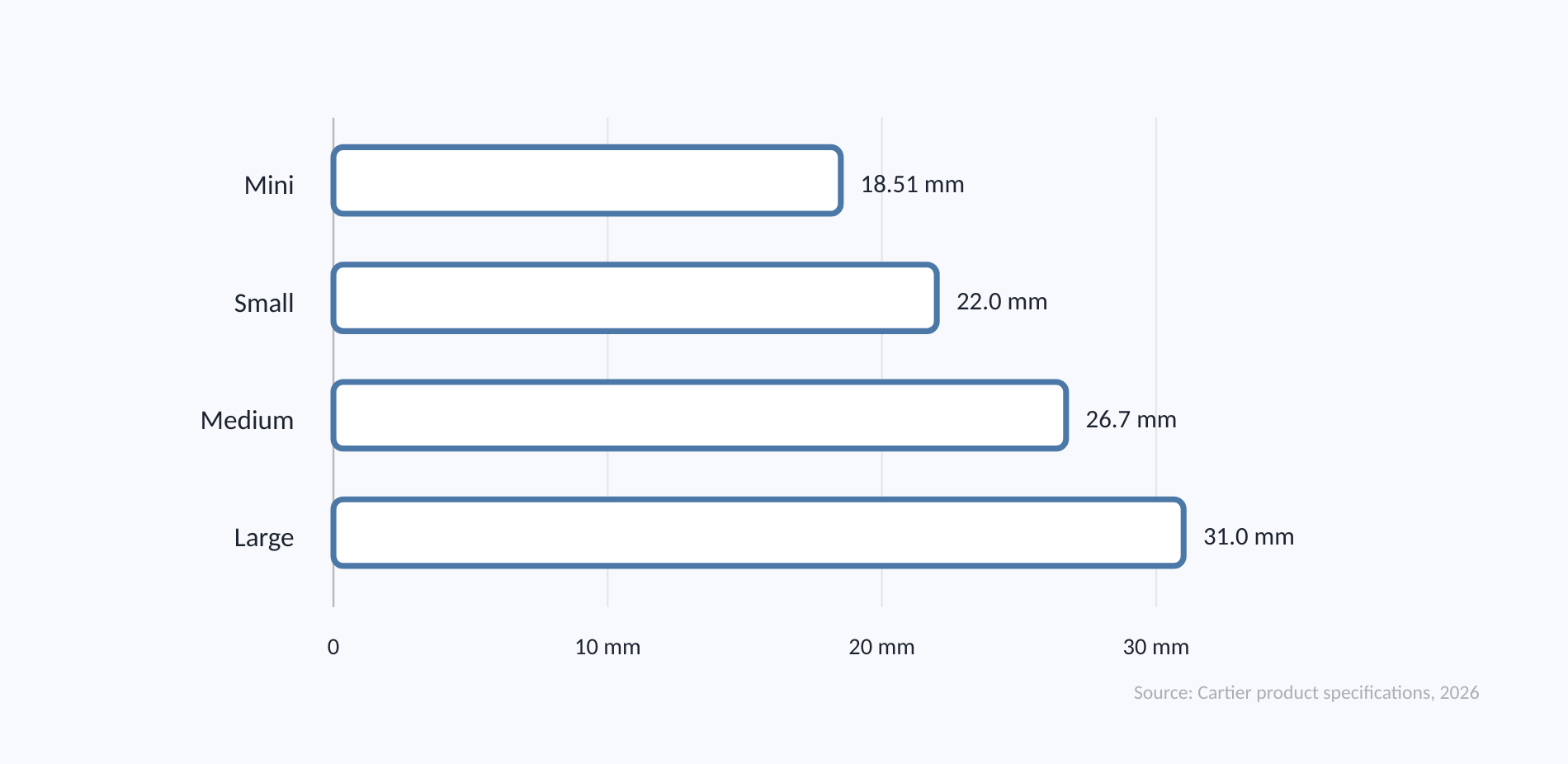
Cartier's specifications report the rectangular cases as height × width. The current examples used here measure 25.15 × 18.51 mm for mini, 30.3 × 22.0 mm for small, 36.5 × 26.7 mm for medium and 42.0 × 31.0 mm for large, according to the manufacturer's mini steel specifications, small steel specifications, medium steel specifications and large steel specifications.

Is the Cartier Panthère mini or small better?
The mini makes the dial deliberately discreet. Its 18.51 mm width is suited to someone who wants the watch to sit among bracelets or function primarily as a jewelry element. The trade-off is a smaller time display, so it should be tried in ordinary indoor light before purchase.
The small is 22.0 mm wide and offers a more conventional balance between dial and bracelet. It remains compact, but the case is easier to notice and read. For a first Panthère or a surprise gift, small is the most defensible baseline unless the wearer clearly favors miniature watches.
When should you choose medium or large?
The medium, at 26.7 mm wide, keeps the slim rectangular format while giving the dial more visual weight. It suits buyers who like the Panthère design but do not want the watch to disappear beside larger bracelets or cuffs.
The large, at 31.0 mm wide, is a deliberate statement. It is still slim at 6.71 mm in the cited steel specification, but the 42 mm case height gives it far more wrist coverage than the traditional small version.
For an in-person comparison, record the width of a watch the recipient already wears and likes. Wrist circumference helps with bracelet length, but an existing case width is a better guide to preferred visual scale.
For most first-time buyers, small is the safest baseline, while mini, medium and large should be deliberate style choices.
Which Cartier Panthère material fits how you will wear it?
Choose the material according to the wearer's existing jewelry, intended frequency of wear and tolerance for visible surface marks. Steel is the restrained entry point, two-tone adds warmth, full gold turns the bracelet into the main event, and diamonds make precise reference verification essential.
| Configuration | Best fit for | Main trade-off | What to verify in a listing |
|---|---|---|---|
| Stainless steel | Frequent wear and a cooler metal preference | Less jewelry impact than full gold | Case and bracelet are both correctly described as steel |
| Yellow gold and steel | Mixed-metal jewelry and a warmer look | Higher price than steel | Gold placement matches photographs and reference data |
| Full 18K gold | A strongly jewelry-led purchase | Much higher purchase price | Exact gold color, bracelet design, weight-related completeness and polishing history |
| Diamond-set | A more decorative or formal configuration | Originality and condition require closer inspection | Reference, factory specification, setting location and any disclosed modification |
The 2026 official collection page shows steel, yellow gold and steel, yellow gold, rose gold and selected white-gold configurations, with diamonds used on numerous references. The material description must cover both the case and bracelet because the Panthère's bracelet is central to its appearance and cost.
Steel is the straightforward choice for regular use and the lowest official retail entry point among the selected examples below. It also keeps attention on the shape and bracelet rather than the intrinsic color of the metal.
Two-tone yellow gold and steel works when the wearer regularly mixes white and yellow metals. It creates a visibly warmer watch without moving to the price level of a full-gold bracelet.
Full yellow gold is the clearest jewelry choice. Because the bracelet contains many articulated links, changing from steel to gold affects more than the case. The metal runs through the visual center of the design.
A diamond Panthère should never be identified from the bezel alone. Match the stated reference to an official factory specification and ask the seller to disclose aftermarket stones, replacement parts or other modifications in writing.
Choose steel, two-tone, gold or diamonds according to daily wear and jewelry preference, not status alone.
What does a Cartier Panthère watch cost in 2026?
Material changes the Cartier Panthère watch price more sharply than moving one step up the size ladder. The figures below are selected official US list-price examples captured in 2026, not a complete collection price list or a forecast of resale value.
Selected plain steel models were listed at $4,300 for mini, $4,950 for small, $5,900 for medium and $6,700 for large. Selected yellow-gold models were $23,800, $27,000, $31,000 and $34,100, while yellow-gold-and-steel examples were $9,750 for small, $11,000 for medium and $12,000 for large; no directly comparable mini two-tone example appeared in that group on Cartier's US collection page.

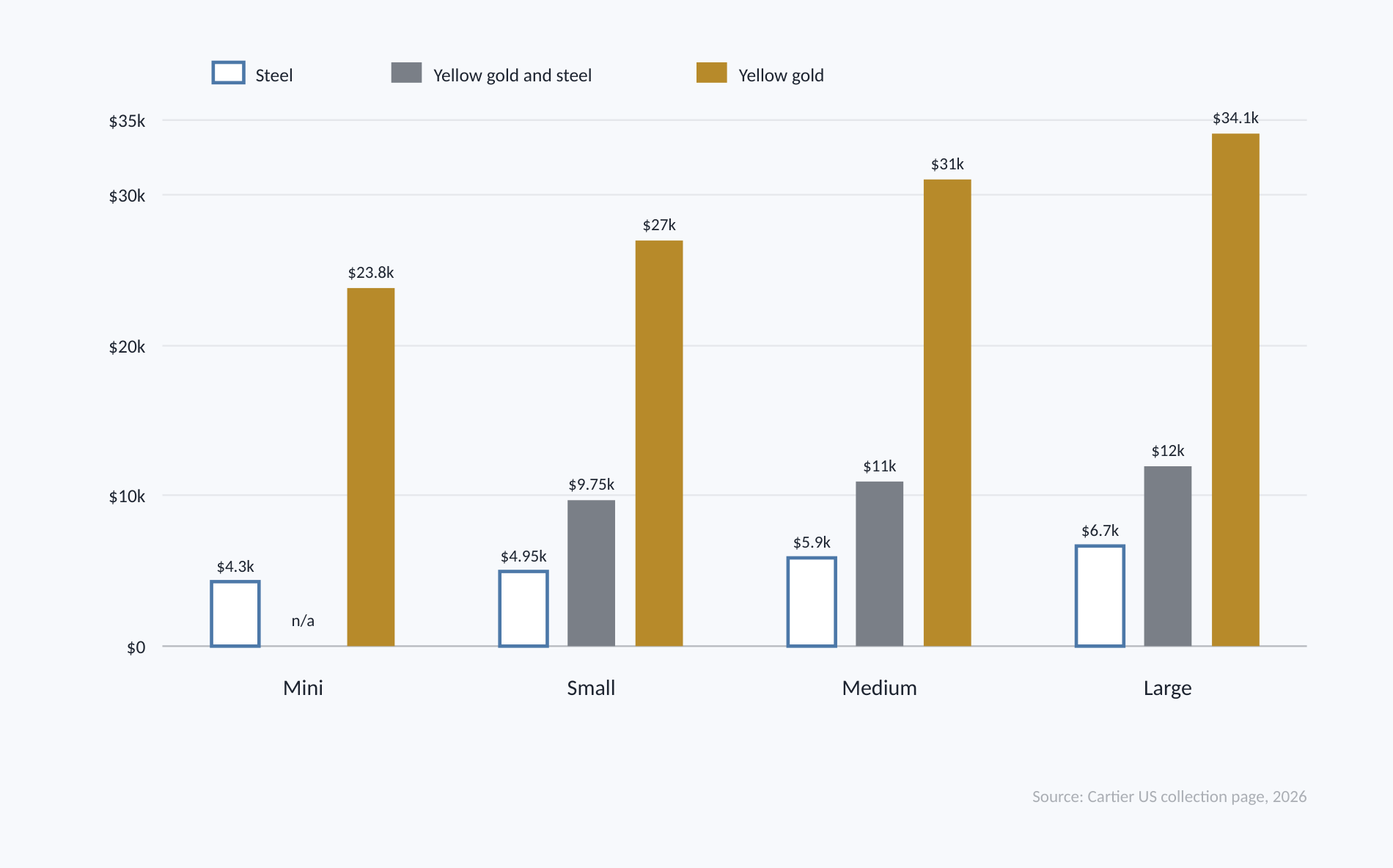
At the small size, the cited configuration rises from $4,950 in steel to $9,750 in two-tone and $27,000 in yellow gold. By comparison, moving through all four steel sizes changes the cited price by $2,400. Material is therefore the first price filter to set.
Diamond setting, alternative bracelet constructions and precious high-jewelry references can move well beyond these examples. Pre-owned asking prices add another variable because age, condition, accessories, service requirements and seller costs differ from one watch to the next.
Compare prices only after matching size, metal, diamonds, bracelet design and reference.
What should a gift buyer decide before ordering?

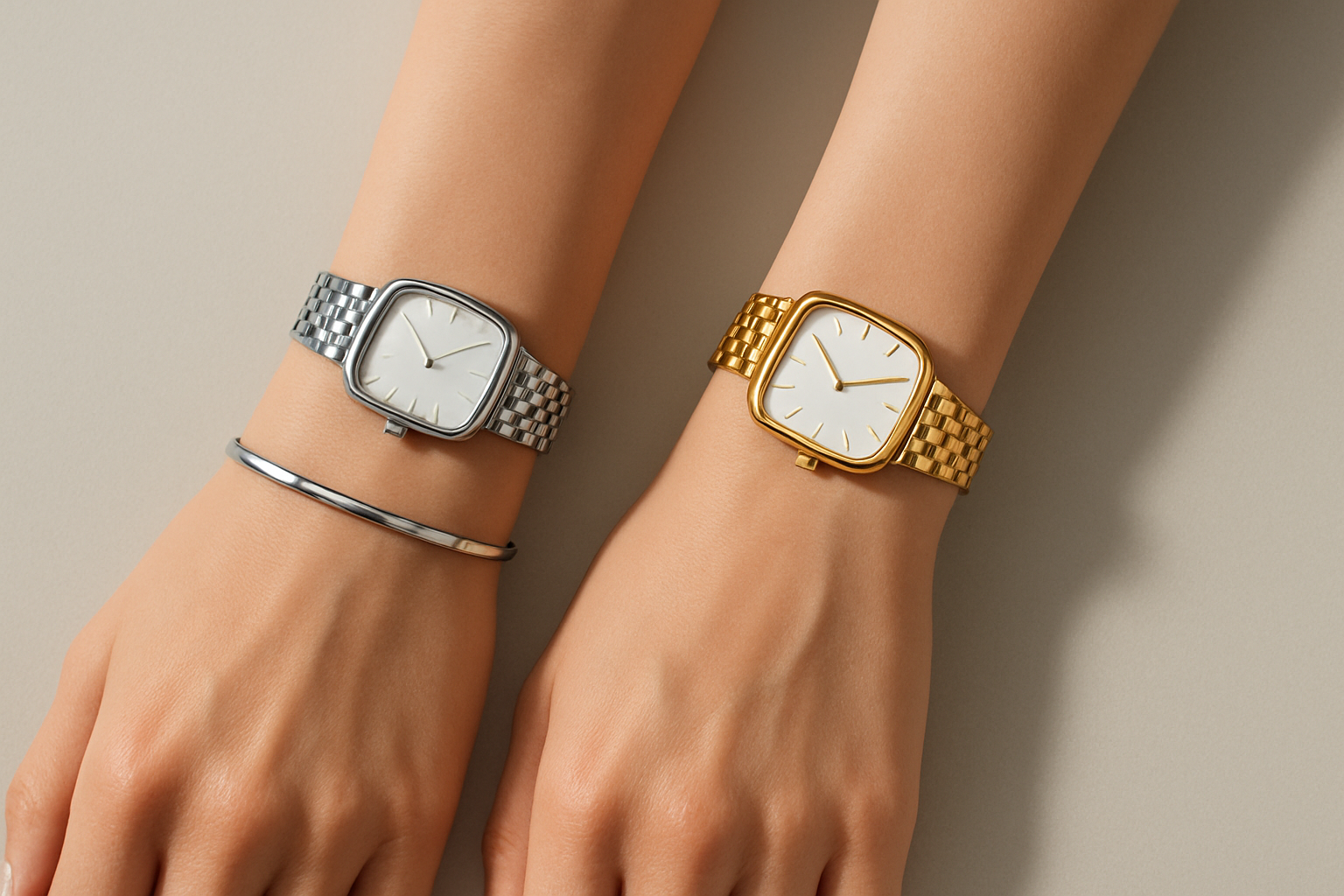
A gift buyer should establish preferred case width and metal before selecting a reference or setting a budget. Small is the safer unknown-size choice, but evidence from the recipient's current watch and jewelry is more useful than a general rule.
Use five practical clues:
- Existing watch width: Photograph or measure a watch the recipient already wears willingly. Compare its case width with 18.51, 22.0, 26.7 or 31.0 mm.
- Jewelry color: Frequent white-metal wear points toward steel. Regular yellow-gold wear supports two-tone or full yellow gold. Mixed jewelry makes two-tone easier to coordinate.
- Reading preference: Someone who reaches for larger, legible dials may find the mini too discreet even when it fits physically.
- Bracelet fit: Confirm wrist measurement and included links. A pre-owned integrated bracelet may not have enough length if links were previously removed and are no longer included.
- Surprise tolerance: If the recipient has never expressed a preference for diamonds, a plain bezel is the lower-risk choice. Return and adjustment terms matter more when the watch cannot be tried first.
A good gift choice reflects the recipient's preferred watch width and metal before it reflects the giver's budget.
What should you check in a Cartier Panthère listing?
Start with the reference number, then verify every visible and written detail against that reference. Two watches described only as small steel Panthère models may differ in age, bracelet construction, included links, service needs and condition.
| Listing detail | Why it matters | What the listing should establish |
|---|---|---|
| Reference number | Identifies the intended configuration | A clear reference plus photographs consistent with it |
| Case dimensions | Prevents mini, small and medium confusion | Height and width in millimeters, not only a size label |
| Case and bracelet metal | Mixed-metal descriptions can be incomplete | Metal for both case and bracelet |
| Diamonds or modifications | A jeweled bezel is not proof of factory setting | Factory specification and disclosure of later changes |
| Bracelet length and links | Determines whether the integrated bracelet will fit | Current fit, removable links and any spare links included |
| Movement and battery | Core references are generally quartz | Running condition, battery-change date and related service work |
| Condition | Polishing and link wear affect appearance | Sharp photographs of case, bracelet, clasp, dial and case back |
| Seller terms | Headline price is not the complete transaction | Payment, shipping, taxes, returns and any seller-provided warranty |
The current mini, small, medium and large specifications cited above use quartz movements and state 3 bar water resistance. Ask when the battery was changed and whether water resistance was checked after the case was opened. Cartier's watch-care guidance says water-resistance seals degrade with age and recommends regular checks.
Actual-watch photographs should show the dial, bezel, case sides, bracelet, clasp and case back in sufficient detail to assess wear. Stock images can explain a model, but they cannot document the condition of the watch being sold.
A trustworthy comparison starts with matching references and complete listing details, not the lowest headline price.
What else do buyers ask about the Cartier Panthère watch?
The common questions concern value, price and whether the design is a sensible purchase. The answers depend on treating the Panthère as a jewelry-led quartz watch rather than assuming every luxury watch serves the same purpose.
Do Cartier Panthère hold value?
Cartier Panthère watches can retain resale demand, but no reference is guaranteed to hold its purchase price. Outcome depends on the exact reference, metal, diamonds, condition, bracelet length, accessories, service needs and selling costs. Compare like-for-like completed sales where available, and treat dealer asking prices as offers rather than confirmed market value.
Why is the Cartier Panthère so expensive?
The Cartier Panthère price reflects more than timekeeping. Buyers are paying for the recognizable case, highly articulated bracelet, finishing, precious-metal content on gold models, diamond setting on jeweled versions and the manufacturer's luxury positioning. Current official US examples also show that material choice creates a far larger price change than moving one case size.
Is the Cartier Panthère watch worth it?
The Cartier Panthère watch is worth considering when the buyer wants a slim, recognizable jewelry watch with quartz convenience and an integrated bracelet. It is a weaker fit for someone who prioritizes mechanical movements, high water resistance or tool-watch durability. Try the intended size and confirm the total configuration price before deciding.
The Panthère makes sense as a design-led jewelry watch, not as a guaranteed investment or a mechanical showcase.
Where can you browse Cartier Panthère listings?
Start with one preferred size and material, then search by reference wherever possible. Current inventory may not contain every combination, so confirm the listing itself rather than assuming availability from this guide.
Search DreamChrono's professional-dealer watch marketplace by reference, brand, collection and detailed watch attributes. Once a possible match appears, use the listing checklist above to compare the watch, included items and seller terms before making contact.
Start with one size, one material and one verified reference, then compare only listings that match all three.