
In short
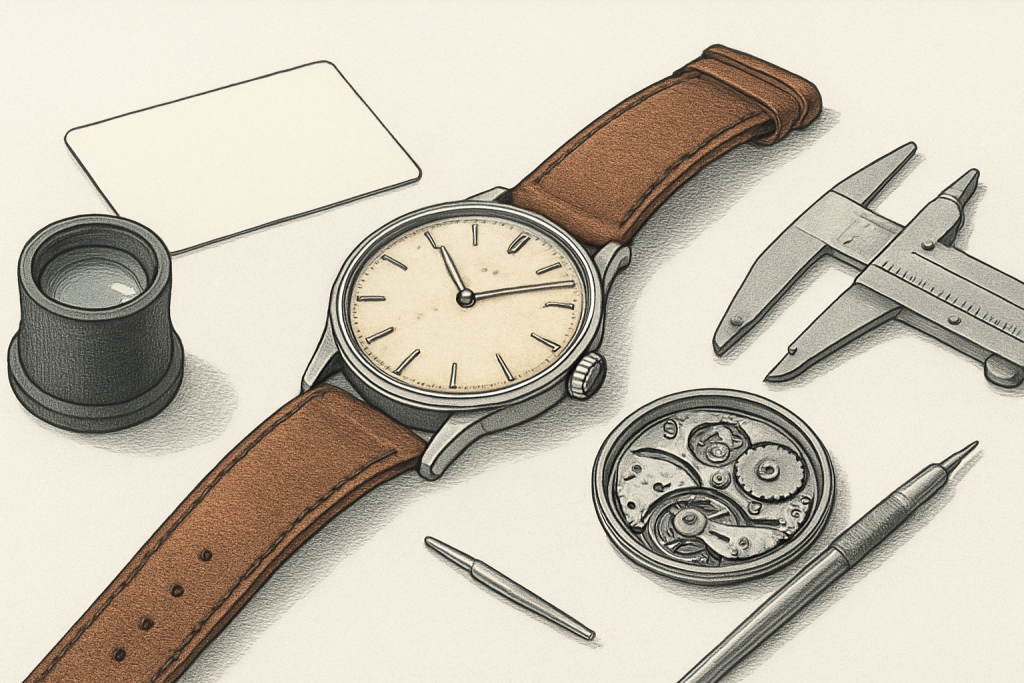
Vintage watches are best chosen by narrowing the search to a use, size, movement, era and service tolerance before comparing dealer listings. A strong listing should identify the brand, model or reference, approximate production period, case dimensions, movement, component condition, service history, included accessories, seller terms and clear photographs, while leaving unresolved points open for verification.
Key takeaways
- Start with a reference or tightly defined model family so photographs, specifications and completed-sale evidence remain comparable.
- A useful listing separates known facts from seller claims and identifies every unresolved point.
- An archive extract can support a watch's history without authenticating the watch or all its components.
- Original water-resistance ratings do not prove that an older watch is safe for water now.
- DreamChrono lists dealer inventory but does not operate platform authentication, condition testing, escrow, valuation or in-house servicing.
Table of contents
- Where can you find vintage watches?
- What should a vintage watch listing tell you?
- Which vintage watch is right for you?
- How do you check originality without pretending certainty?
- What costs and risks sit outside the asking price?
- What do buyers ask about vintage watches?
- What should you do next?
Use this guide in two passes. First, eliminate watches that do not fit the intended use or wrist; then investigate the identity, components, service needs and seller terms of the remaining candidates.
Where can you find vintage watches?

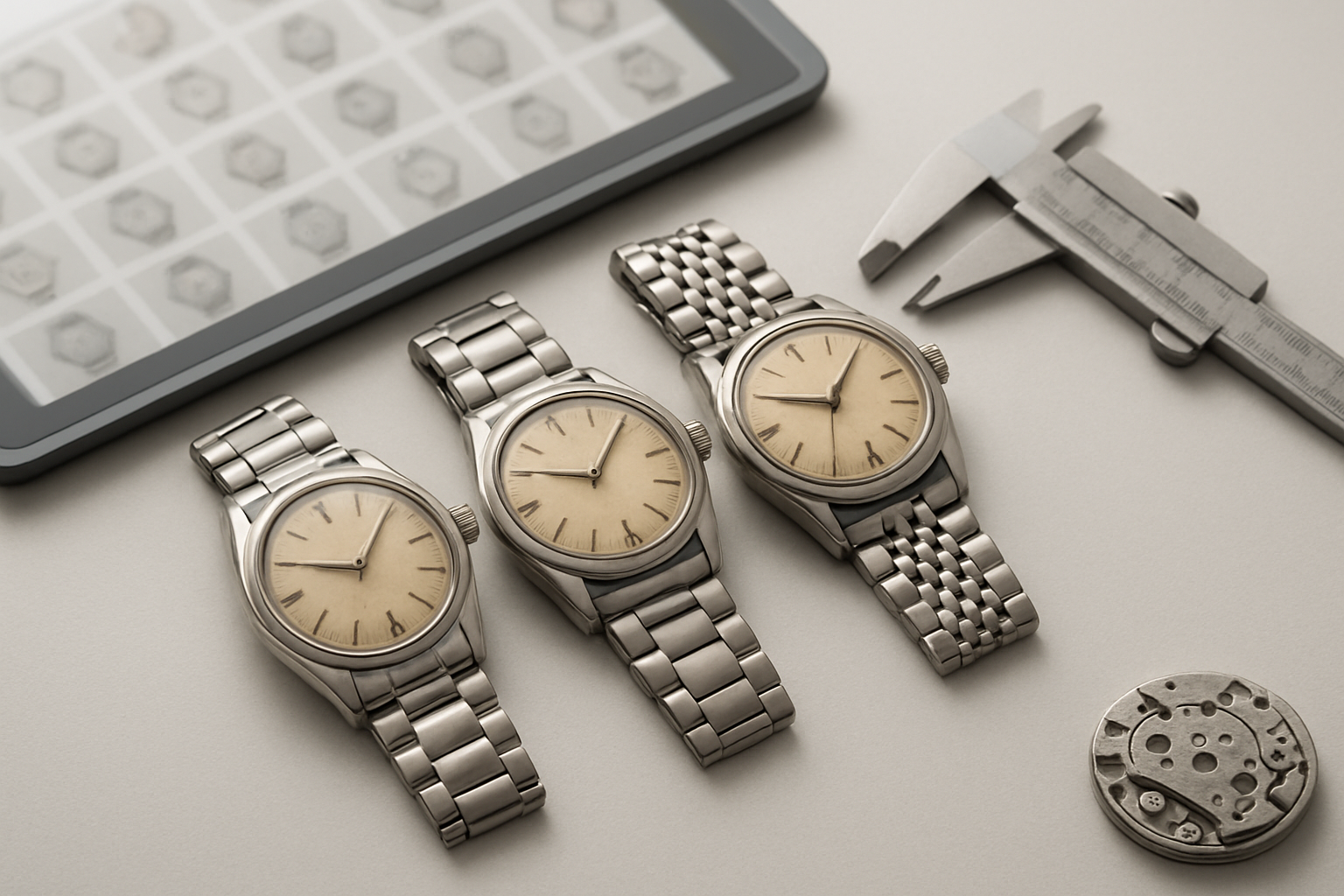
Professional dealer marketplaces and specialist dealers are practical starting points because model information and seller details can be reviewed before contact. As of September 2026, DreamChrono displays professional-store listings and supports filters including reference, brand, collection, diameter, material, movement, functions and water resistance. (dreamchrono.com)
Start broad only long enough to identify a few references or configurations. Comparing ten unrelated watches usually produces more enthusiasm than clarity, while comparing three examples of the same reference exposes differences in dials, cases, bracelets and descriptions.
DreamChrono is a listing venue rather than a platform-operated authentication, condition-testing, escrow, buyer-protection, valuation, warranty or servicing program. Treat listing information as seller-provided unless a page identifies an independent document or service, and ask the relevant dealer to resolve missing details.
A marketplace helps you find candidates; the seller's evidence and terms determine whether a candidate deserves further attention.
What should a vintage watch listing tell you?
A useful vintage watch listing should make the watch identifiable, show its present condition and explain what accompanies the sale. Missing information does not automatically make a watch unsuitable, but every omission becomes a question that must be answered before payment.
| Listing field | What to look for or ask |
|---|---|
| Identity | Brand, model, reference and any visible serial or case number |
| Date | Production year, approximate period, or the evidence supporting the estimate |
| Dimensions | Diameter, length, thickness and bracelet or strap fit |
| Movement | Caliber, winding type, functions and whether the movement has been inspected |
| Components | Dial, hands, crown, crystal, bezel, case, bracelet and known replacements |
| Operation | Service date, observed timekeeping, power reserve and functional faults |
| Sale terms | Included box or papers, final price, shipping, insurance, returns and payment method |
Use missing fields as questions for the seller, not assumptions.
Photographs should include the dial straight on, both case sides, crown, lugs, case back, clasp or buckle and any visible damage. Request close-ups under neutral light when glare, heavy editing or shallow focus obscures printing, edges, corrosion or scratches.
A seller's statement that a watch is running describes a moment, not its future service needs. Ask how long it was observed, which functions were tested, who performed the last service and whether an invoice identifies replaced components.
Treat every blank field as an unanswered question, not permission to make a favorable assumption.
Which vintage watch is right for you?
Choose by intended use, wrist fit, movement preference and maintenance tolerance before considering status or rarity. The term vintage has no universal cutoff, so an approximate production period is more useful than the label alone.
Some collector discussions use around 25 years old as shorthand. That language is useful for conversation, but a listing should still identify a year, range, reference or generation.
Use five filters to build a shortlist:
- Use: Decide whether the watch is for frequent wear, occasional wear, formal use or collection study.
- Fit: Compare diameter, case length, thickness and bracelet range with a watch that already fits.
- Movement: Choose manual, automatic or quartz only after checking local service options for the caliber.
- Configuration: Define the dial, case metal, bezel, bracelet and functions that matter.
- Condition: Decide how much polishing, patina, replacement work or cosmetic damage is acceptable.
Search labels such as vintage watches for women and vintage watches for men can help discovery, but case dimensions and proportions give a clearer indication of fit. The same principle applies when comparing vintage Seiko watches with vintage Cartier watches: brand and category narrow the field, while the exact reference and configuration determine what is actually being assessed.
Choose the watch that fits the wrist, use and maintenance tolerance before choosing the most famous name.
How do you check originality without pretending certainty?
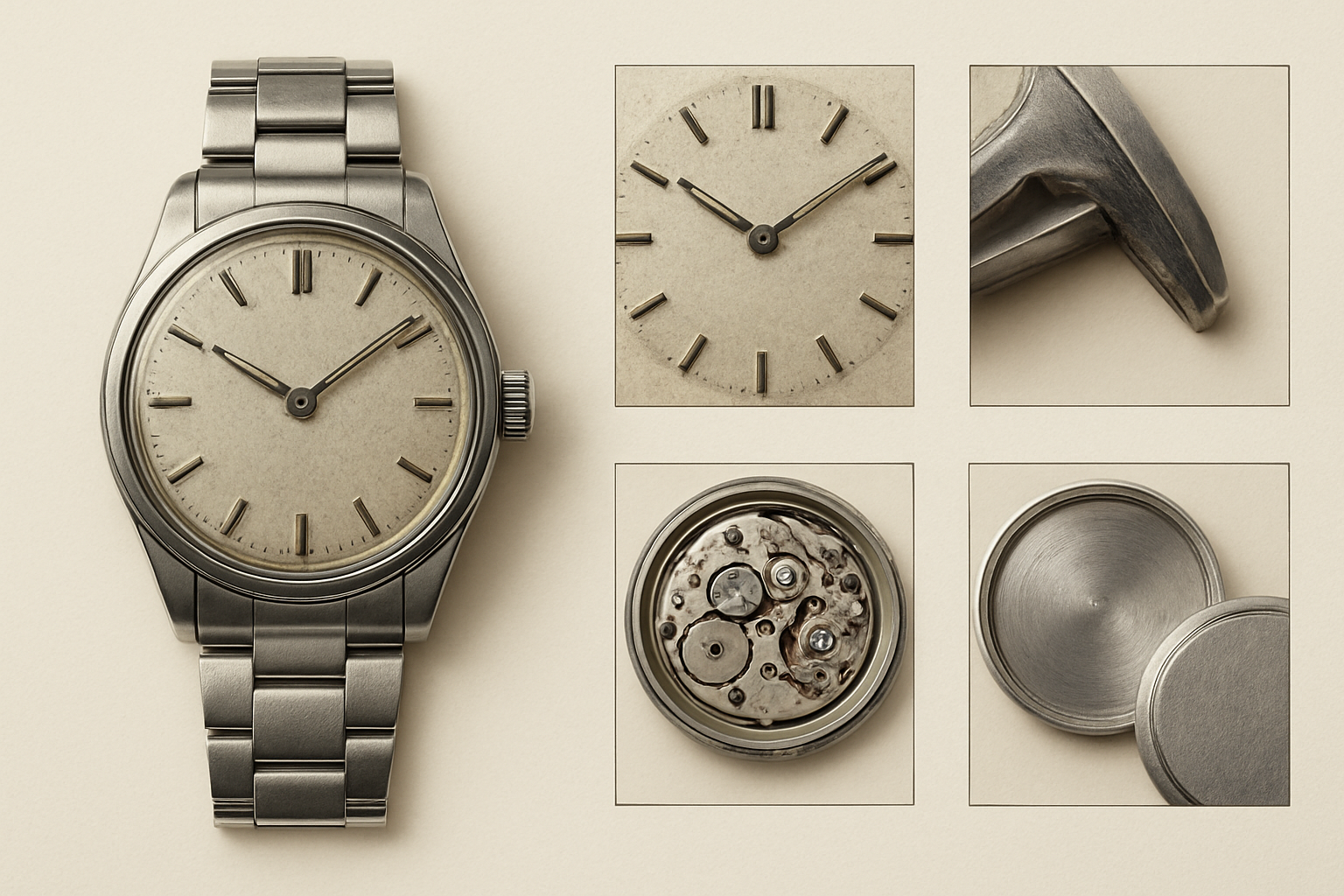
Originality should be investigated component by component rather than accepted as a single seller adjective. Photographs, reference material and documents can strengthen a conclusion, but qualified physical inspection may still be needed when the case or movement must be opened.
As of September 2026, Longines's current archive-service terms explicitly distinguish an archive extract from a certificate of authenticity. Longines states that an archive extract does not authenticate the watch or its components and advises owners not to open a case themselves to obtain information. (longines.com)
Check each area separately:
- Case: Look for clear engravings, coherent finishing, corrosion and signs of heavy refinishing.
- Dial and hands: Ask whether either has been refinished, relumed or replaced.
- External parts: Check whether the crown, crystal, bezel, pushers and bracelet match the stated period.
- Movement: Request the caliber, visible numbers, corrosion status, service findings and known replacement parts.
Service history also needs interpretation. Cartier's current complete-service explanation says damaged components may be replaced with authorization and explains that refinishing removes a thin layer of metal. A serviced watch may therefore function well while differing from its earlier configuration. (int.cartier.com)
Originality is established component by component, and uncertainty should remain visible until qualified inspection resolves it.
What costs and risks sit outside the asking price?
The asking price is only one part of a vintage watch purchase. Service, replacement parts, shipping, insurance, tax, import requirements, strap replacement and an unfavorable return policy can change the real cost substantially.
Do not assume an original depth rating remains valid. Seiko's current water-resistance guidance states that water resistance is not permanently guaranteed because gaskets age and watch parts can be deformed by shocks. Until a qualified professional has tested the specific watch, keep it away from water. (seikowatches.com)
For buyers in the United States, the FTC online-shopping guidance advises checking the total cost, delivery promise, refund terms and return expenses, then retaining receipts and seller communications. The FTC also recommends credit-card payment when possible, but actual protections depend on the payment method and applicable law. (consumer.ftc.gov)
Cross-border purchases may require additional documentation. The U.S. Fish and Wildlife Service import guidance states that wildlife products can be subject to U.S. import and export rules, including CITES requirements. Ask before shipping a watch fitted with alligator, crocodile or another wildlife-derived strap. (fws.gov)
Before paying, confirm the invoiced total, payment recipient, shipping method, insurance limit, customs responsibility, return deadline, inspection conditions and the process for reporting a materially misdescribed watch.
The real purchase cost is the asking price plus every unresolved service, delivery, tax and documentation risk.
What do buyers ask about vintage watches?
These questions are common because search results mix buying advice with storefronts. The answers below keep model appeal separate from the evidence needed for a transaction.
Which vintage watches are worth money?
Vintage watches are worth money when buyers value the exact reference, configuration and condition, not merely the brand name or age. Compare recent completed sales for the same reference, dial, metal, size and accessories, then subtract likely service and replacement-part costs. DreamChrono does not provide valuation or price-history analytics.
What are the best vintage watches?
The best vintage watches are models that fit the buyer's wrist, use and maintenance tolerance, with identities that can be checked against dependable reference material. A less famous watch with clear photographs, disclosed service history and obtainable support can be a better purchase than a prestigious reference carrying unresolved questions.
What are good brands for vintage watches?
Good brands for vintage watches are those with documented references, recognizable calibers and a realistic service route in the buyer's region. Seiko, Omega, Cartier and Rolex all produced watches now traded as vintage, but the name on the dial cannot confirm originality, condition, serviceability or fair value for an individual watch.
What is the best vintage watch under $100?
There is no universal best vintage watch under $100 because availability and condition change from listing to listing. At that budget, favor a clearly identified, functioning quartz or simple mechanical watch over an unclear prestige claim. Check setting, crown operation, corrosion, battery leakage risk, timekeeping observation and return terms before paying.
The best vintage watch is the one whose identity, condition and ownership costs can be understood before payment.
What should you do next?
Build a shortlist of no more than three watches that meet the same use, size and movement brief. Reject any candidate whose identity, condition or transaction terms remain too vague for the price and risk involved.
Use DreamChrono Marketplace / Buy Watches to filter current dealer listings by reference, brand, collection and technical attributes, then send the relevant seller the unresolved questions from the checklist before agreeing to buy.