
In short
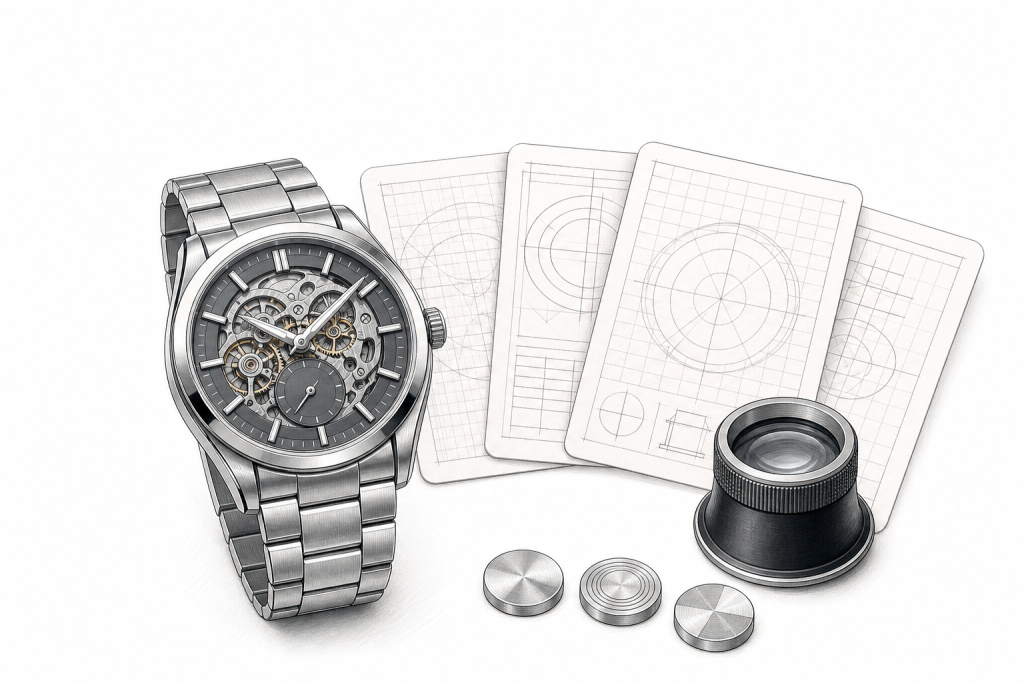
A watch database is best used to identify a model by brand, collection and reference, then compare documented specifications with the watch or listing in front of you. DreamChrono’s Watches Database connects that reference work with marketplace listings, but it is not an authentication certificate, valuation tool or stolen-watch registry.
- A watch reference narrows a search to a defined model or configuration, while a serial number may relate to one individual watch.
- Technical specifications help readers compare documented case, movement and function details before they buy, sell or list a watch.
- A reference database can guide questions for a seller or specialist, but it cannot prove that an individual watch is genuine or unmodified.
- DreamChrono’s dealer documentation describes database-driven technical-specification pre-fill for listings searched by reference or by brand and collection.
Contents
- What can a watch database tell you before you buy?
- How do you search when the reference number is missing?
- What is the difference between a reference, a serial number and a catalog watch?
- Can a watch database prove authenticity or check whether a watch is stolen?
- How can dealers use watch reference data in a listing?
- What else do people ask about watch databases?
- What should you do after you find a likely reference?
A good watch search begins by separating two jobs that are often mixed together. The first is model identification: determining what a watch was made to be. The second is assessment: determining whether the specific watch offered for sale matches that description, has the stated history and is suitable for the buyer.
What can a watch database tell you before you buy?

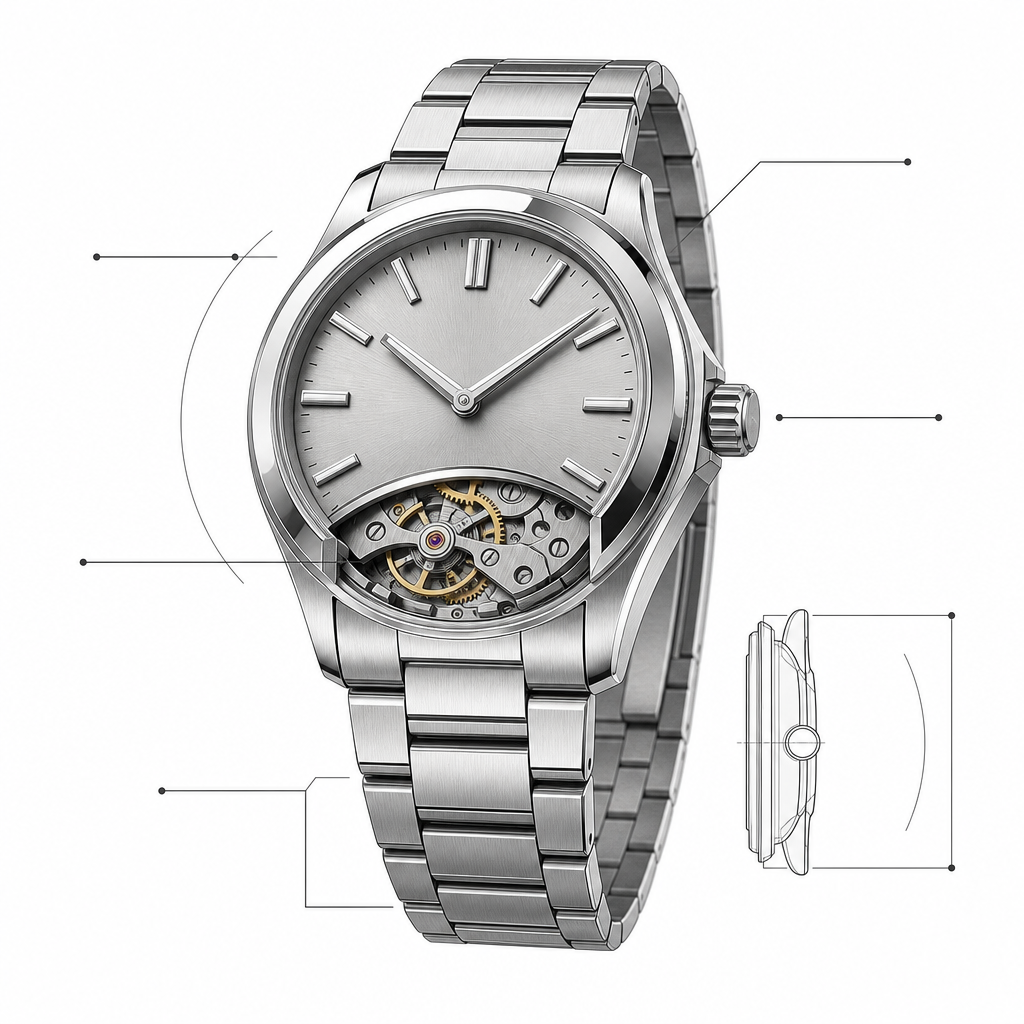
A watch database can give you a documented baseline for a model: its brand, collection, reference and technical characteristics. It cannot establish the condition, originality, ownership history or authenticity of the individual watch in front of you.
The useful part of a database is not just the name at the top of the page. A model record can give a reader a structured way to check whether the broad description of a listing makes sense. Depending on the watch and the available record, that may include the collection, reference, case material, case dimensions, movement type, functions, water resistance or bracelet configuration.
DreamChrono’s marketplace filters are built around this kind of structured information, including brand, collection, reference, case characteristics, movement, functions and water resistance. That matters because a watch called by one familiar collection name can still exist in several sizes, materials, dial versions or movement generations.
Use the database record to make a comparison list, not to reach a rushed conclusion. If the record says a reference was cataloged with a particular movement or feature set, compare that information with the seller’s photographs, description and supporting paperwork. Where the details do not align, note the difference and ask about it.
The original manufacturer documentation remains the strongest source when it is available. Independent databases can organize information that makes research faster, but older watches, regional variants and watches with replaced components may require more careful checking.
A watch database is most valuable when it converts a vague model name into specific features you can compare with the actual watch.
How do you search when the reference number is missing?

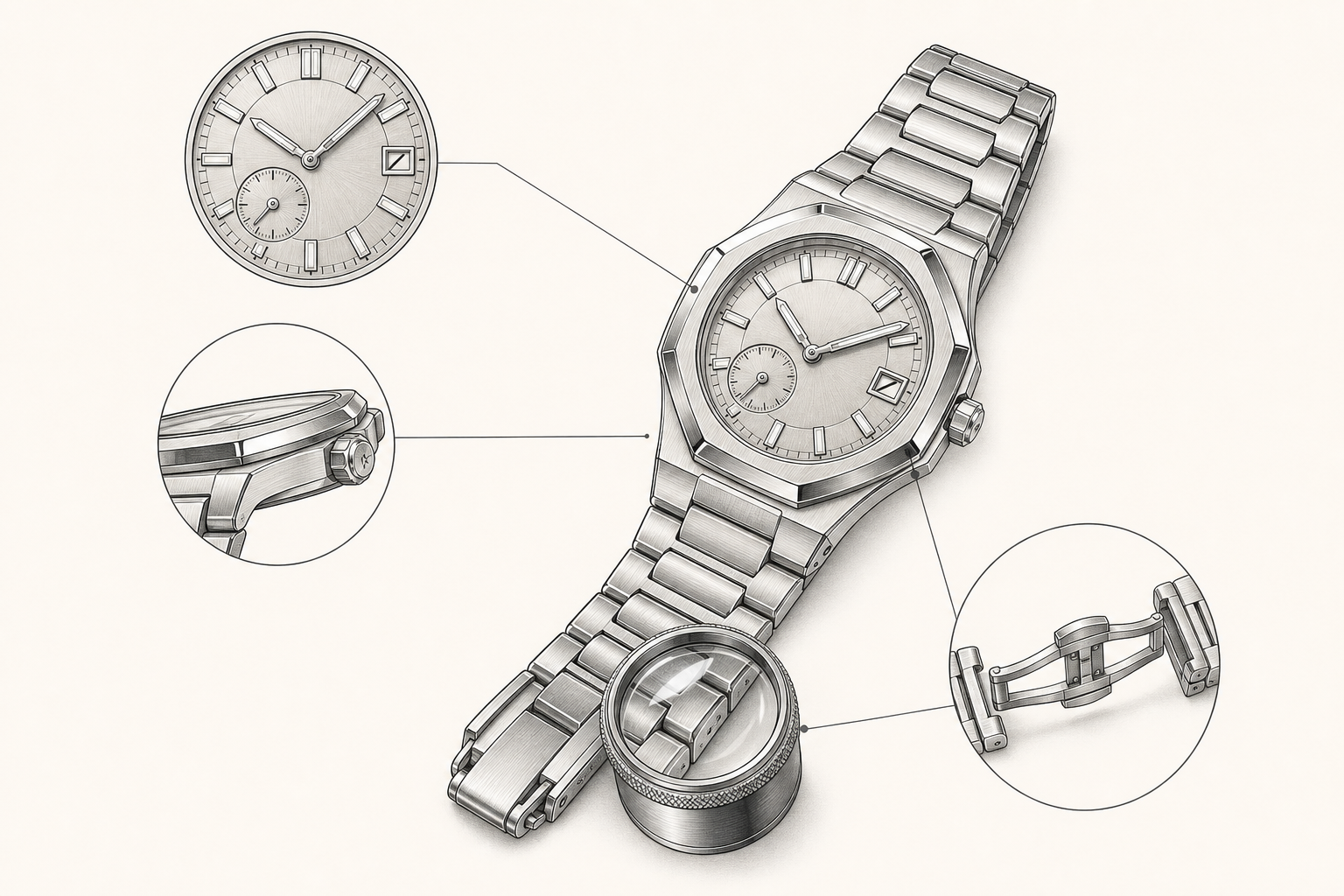
When the reference number is missing, begin with the evidence you can see and use it to narrow the field step by step. Start broad with the brand and collection, then test likely records against physical details instead of forcing an early match.
First, record the information exactly as it appears. A brand name, collection name, dial wording, unusual bezel, case shape, number of subdials, date position and bracelet style can all help exclude unsuitable results. A partial code can be useful, but do not silently fill in missing characters just because one database result looks close.
Next, search the likely brand and collection before filtering by characteristics that are easier to verify from photographs. Case material, diameter, dial layout, complication type and movement category can help narrow several related references to a smaller group. Keep the search trail visible so you can revisit an assumption if a later detail does not fit.
This is particularly useful for collections with many related variants. A guide to seiko presage watches can add collection context after a database search identifies a likely family. The same approach applies to major design families: readers researching audemars piguet royal oak watches can compare the likely reference with a focused guide before treating a search result as final.
For vintage watches, uncertainty is part of the record. A cautious note such as “likely family, reference not confirmed” is more useful than a confident but unsupported identification. It also gives a dealer, watchmaker or independent specialist a clearer starting point if further review is needed.
When the reference is unknown, the right result is often a short list of plausible models rather than one forced answer.
What is the difference between a reference, a serial number and a catalog watch?
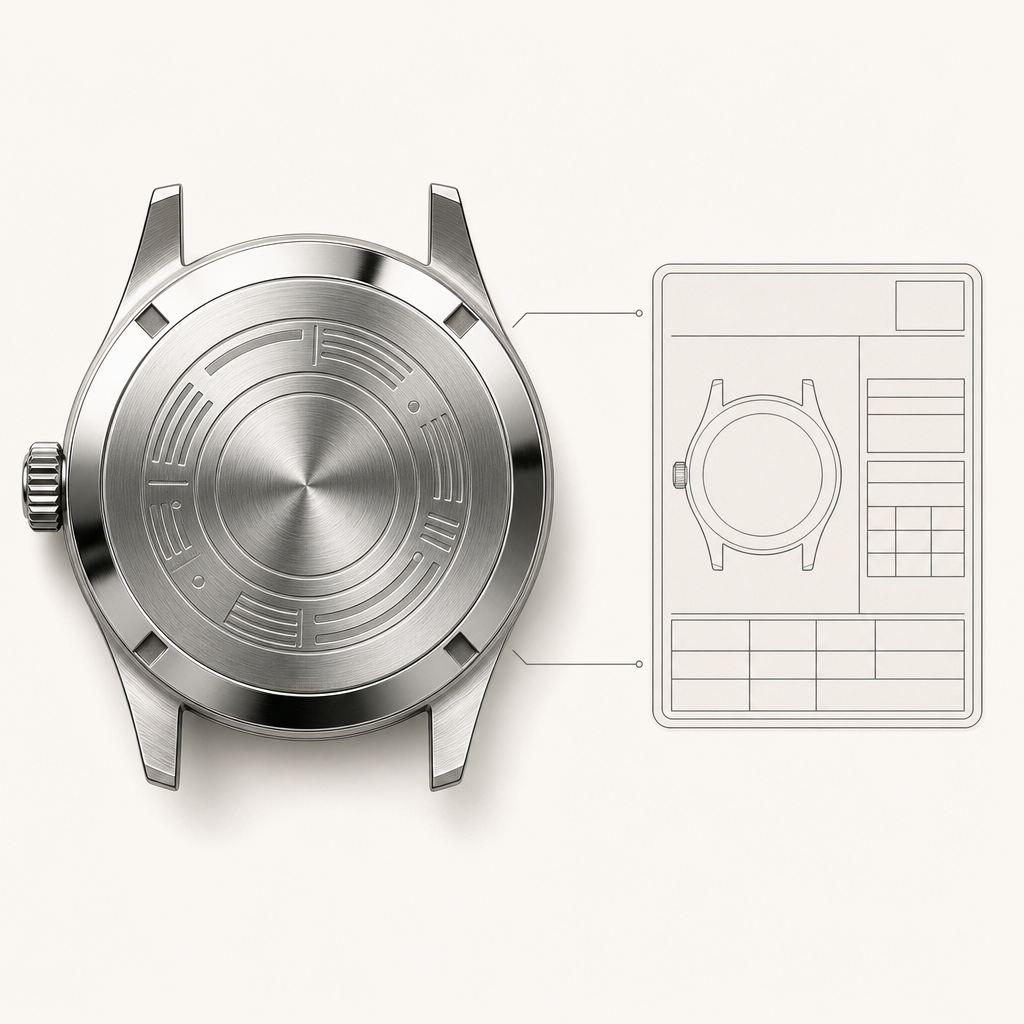
A reference identifies a model or configuration, while a serial number can identify an individual watch where the manufacturer uses one. A catalog watch usually means a production model documented in a manufacturer catalog, but the phrase is descriptive rather than a universal technical classification.
A reference number is the most useful starting point for a database search because it usually connects to a defined model record. A reference may distinguish a case size, metal, dial treatment, movement or bracelet configuration from closely related watches in the same collection.
A serial number is different. When a manufacturer provides one, it may relate to an individual watch or production sequence rather than the cataloged model itself. Serial formats, locations and accessibility vary by maker and period, so a serial should be treated as one clue among several, not as a shortcut to an identity verdict.
A catalog watch generally refers to a production watch that appeared in a maker’s catalog or official material. That wording can help distinguish a documented production configuration from an unusual assembly or an undocumented variation, but it does not prove that every component on an individual watch remains original.
Keeping these labels separate prevents a common research error: using a model-level record to make a claim about an individual watch.
Can a watch database prove authenticity or check whether a watch is stolen?
No. A reference database can show what a model is documented to look like, but it cannot inspect the watch, verify its components or confirm whether it has been reported lost or stolen.
Authentication asks whether the individual watch and its components are genuine and correctly represented. That requires physical examination and, in some cases, specialist knowledge of details that are not visible in a standard listing. DreamChrono does not present the Watches Database as a platform-operated authentication or condition-testing service.
A stolen-watch check asks a separate question: whether an individual watch has been reported lost, stolen or otherwise flagged in a dedicated registry. A model database is not a stolen-watch registry, even if it contains a reference number or helps a buyer understand where an identifying marking may appear.
Valuation is separate again. A database can help identify the correct model before someone compares listings, but DreamChrono does not offer market-price history, portfolio-value analytics or a valuation tool through the Watches Database. Research the reference first, then seek the right kind of expertise for authenticity, ownership-risk or value questions.
A specification record can make due diligence more precise, but it is never a substitute for the specific check a transaction requires.
How can dealers use watch reference data in a listing?
Dealers can use structured watch data to reduce repetitive entry of technical fields when creating a listing. The seller must still describe the individual watch accurately, including its condition, included accessories and any facts that the model record cannot know.
As of September 2026, DreamChrono’s seller documentation describes a workflow where dealers search by reference or by brand and collection, then use database data to pre-fill technical watch features. The same documentation states that data-entry support is available when a watch is not already in the database, including for vintage listings that need more individual handling.
That workflow helps keep model-level fields consistent across listings. It does not remove the dealer’s responsibility to check the watch being listed. Photographs, condition notes, service history, originality questions and the asking price belong to the individual listing rather than the general model record.
Professional sellers who need a marketplace storefront can review the DreamChrono dealer listing workflow alongside the reference-data tools. The practical aim is simple: spend less time repeating standard specifications and more time making the individual listing clear.
Dealer pre-fill is useful when it saves repeated specification entry without replacing careful verification of the actual watch.
What else do people ask about watch databases?
The questions below address common search phrases, but each answer keeps the limits of a watch database clear. A database is a research tool, not a universal answer to collecting, pricing, ownership or authenticity questions.
What is the 3 watch rule?
The “3 watch rule” is an informal collecting idea, not an industry standard or a database category. It usually describes a small watch rotation for different uses, such as everyday wear, dressier occasions and sport. A watch database is more useful for comparing the actual references and specifications a collector is considering.
Is there a database for stolen Rolexes?
Yes, but the relevant resource is a dedicated lost-and-stolen watch registry rather than a model-reference database. A reference database can organize Rolex model details and reference information, while a registry checks whether an individual watch has been reported. Neither check replaces careful review of the seller, documents and physical watch.
What is a cheap luxury watch brand?
“Cheap luxury watch brand” is a subjective shopping phrase, not a technical field found in a watch database. A useful database can help compare movement type, materials, dimensions, functions and reference details between watches. It should not be treated as a price guide, a value forecast or a universal definition of luxury.
What is a catalog watch?
A catalog watch generally means a production model documented in a manufacturer catalog or official product material. The phrase can help identify an intended configuration, but it does not establish the originality or condition of a specific watch. Compare the cataloged record with photographs, paperwork and the watch itself.
The best use of a watch database is to answer the model question clearly before moving to condition, ownership-risk and price questions.
What should you do after you find a likely reference?
Save the candidate reference, compare its documented features with the listing and write down any mismatch before contacting the seller. The goal is not to make a database result carry more certainty than it can, but to arrive at the next conversation with better questions.
For a model search that can lead into current listings, use the DreamChrono Watches Database. Start with the brand, collection or reference you know, then use the resulting specifications as a disciplined comparison point.
The best database result is the one that tells you what to verify next.