
In short
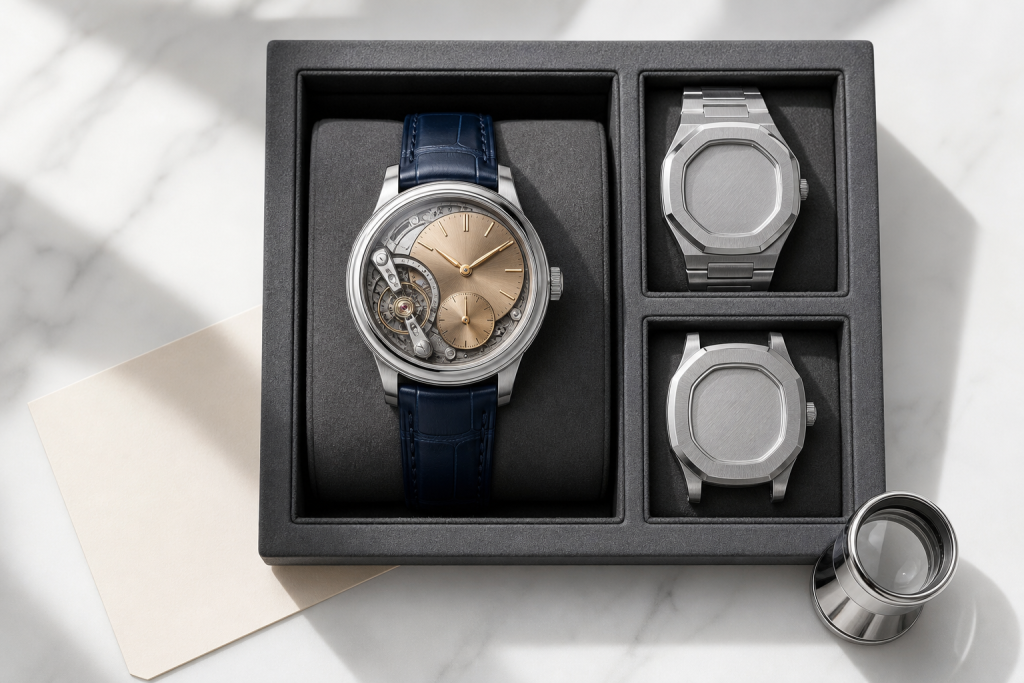
F.P. Journe watches range from restrained hand-wound chronometers to integrated-bracelet sports watches, high complications, and the quartz élégante. The right starting point is not a headline price or a broad collection name, but the exact reference, production era, configuration, and the evidence accompanying the individual watch.
Key takeaways
- F.P. Journe’s official catalog separates current Classique, lineSport, élégante, jewelry, boutique, and Black Label offerings, while retrospective references require a different level of listing-by-listing research.
- A collection name is only a first filter: case material, diameter, caliber, dial, production period, and included accessories can materially change what a listing represents.
- The current Chronomètre Bleu is a 39 mm tantalum, manually wound model with F.P. Journe Calibre 1304 and a stated 56-hour power reserve.
- Official catalog status does not prove that a specific watch is immediately obtainable, and a marketplace listing does not replace documentation and condition checks.
- F.P. Journe itself warns collectors about fraudulent items, usurped serial numbers, and dials that do not conform to original production.
F.P. Journe is a brand where the broadest labels can hide meaningful differences. A Chronomètre à Résonance, for example, identifies an important model family, but the specific reference, display layout, movement generation, dial, case, service history, and included items still determine what a buyer is actually considering.
The guide below uses F.P. Journe’s official catalog as the reference baseline as checked on October 18, 2026. It does not estimate investment returns, provide authentication, or promise availability. Its job is to help a collector turn a broad search for F.P. Journe watches into a shortlist that can be researched properly.
Which F.P. Journe collection fits your brief?

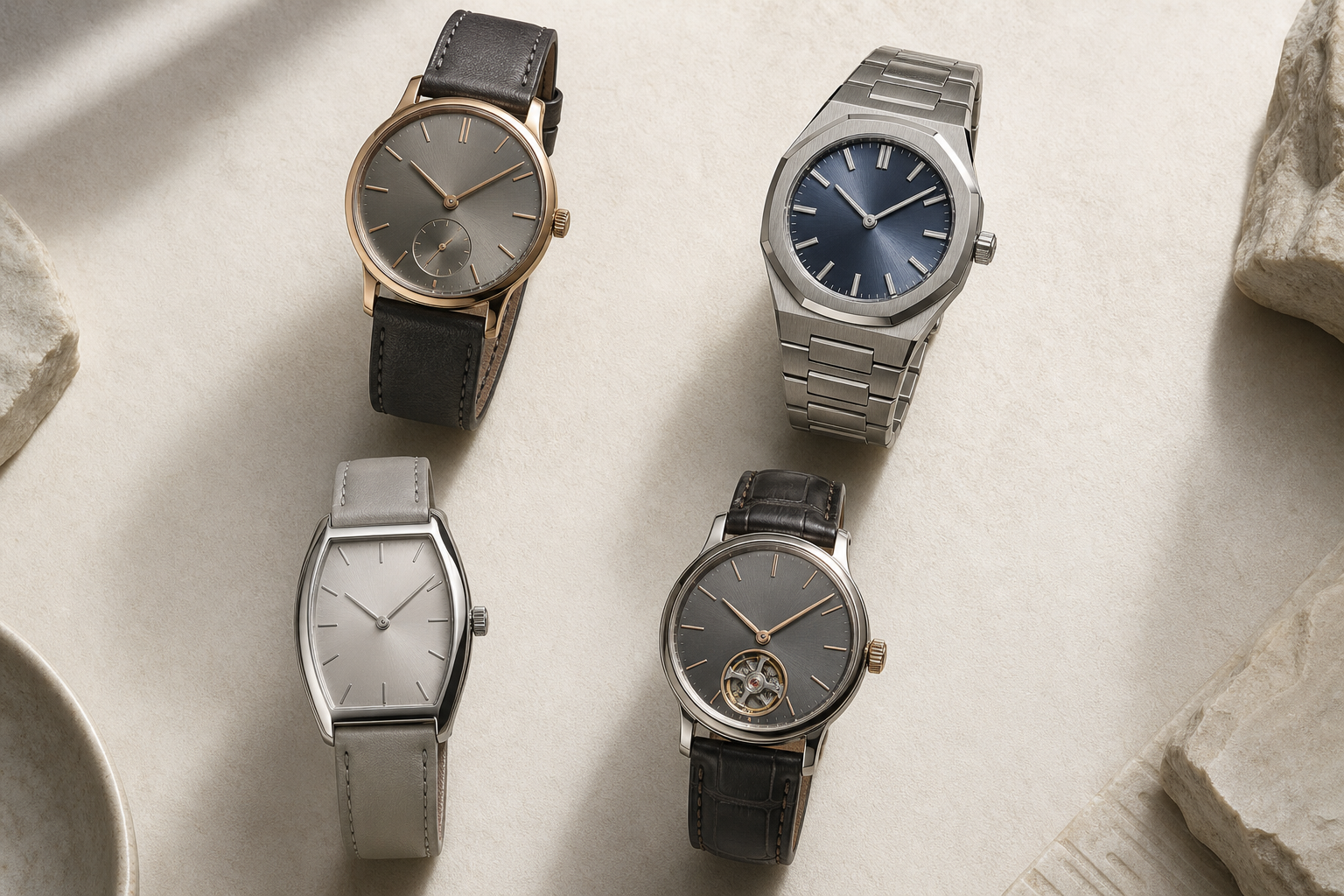
F.P. Journe’s current catalog is easiest to approach as several distinct families rather than one continuous range. Start by deciding whether you want traditional hand-wound watchmaking, an integrated-bracelet sports format, an électromechanical quartz watch, or a specific complication.
The official F.P. Journe collections index currently lists Classique, lineSport, élégante, jewelry, boutique, and Black Label groupings, alongside retrospective collections and unique pieces. Boutique and Black Label are best treated as availability or configuration layers within the catalog, not as a shortcut to identifying an individual watch.
Classique: the core mechanical catalog
The Classique collection is the natural place to begin when the priority is the familiar F.P. Journe combination of precious-metal movement architecture, traditional round cases, and mechanically focused displays. As of October 18, 2026, the official catalog includes the Chronomètre Bleu, Chronomètre Souverain, Automatique, Automatique Lune, Lune, Divine, Quantième Perpétuel, Chronomètre Optimum, Chronomètre à Résonance, Répétition Souveraine, Tourbillon Souverain, FFC, and Astronomic Souveraine among its named Classique entries.
This is not one aesthetic or technical proposition. A simple time-only manual watch, a resonance chronometer, a perpetual calendar, and a minute repeater belong in very different shortlists even if they share the same maker.
lineSport: the integrated-bracelet route
The lineSport range is the place to look for F.P. Journe watches with an integrated-bracelet format and a more overtly technical exterior. The current official catalog names the Chronomètre Furtif, Automatique Réserve, Centigraphe, and Chronographe Rattrapante.
The current Chronomètre Furtif is a useful example of why the family name is not enough. F.P. Journe specifies a 42 mm tungsten-carbide case and bracelet with tantalum elements, a manually wound 18K rose-gold Calibre 1522, and moon-phase and power-reserve indications on the reverse. Its official product page provides the baseline specification, not proof of retail availability.
élégante: a different proposition, not a lesser one
The élégante is the brand’s quartz-led collection and appears in 40 mm and 48 mm formats, with titanium, Titalyt®, diamond-set, and bracelet variations in the current catalog. It belongs on a separate shortlist because the movement technology, wearing experience, case shapes, and configuration choices differ sharply from the hand-wound Classique and lineSport watches.
A collector looking for a discreet mechanical chronometer should not start with an élégante. A collector who values its shaped case, convenience, and distinctive display should not dismiss it because it is quartz.
Choose the collection by the wearing format and mechanical proposition first, then narrow to the reference that matches the exact configuration you want.
Which current references should be on your shortlist?

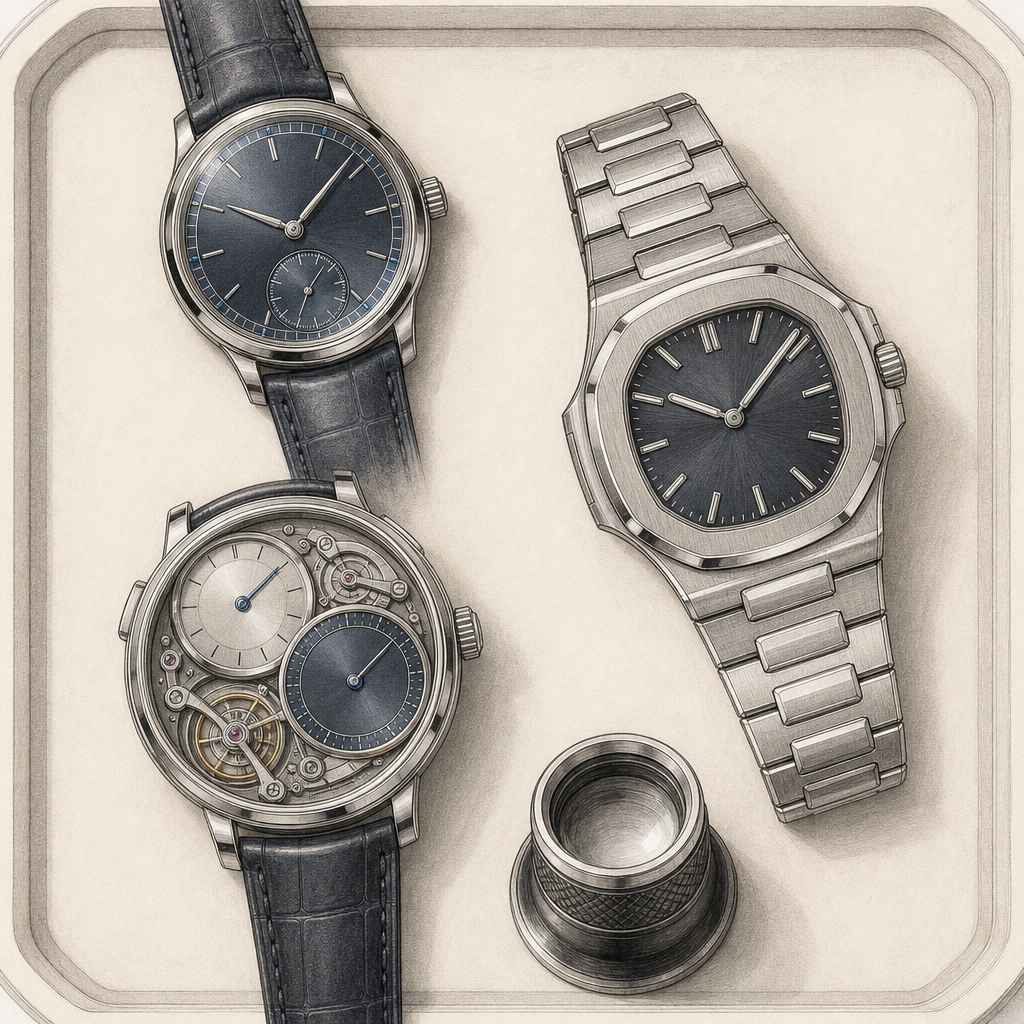
A useful shortlist starts with the job the watch needs to do. The point is not to rank models universally, but to match a reference family to the feature that caused the search in the first place.
The table below is a research map, not an availability list. Specifications should always be checked against F.P. Journe’s official product page and then against the individual listing.
| If your priority is | Reference family to research | What to establish before comparing listings |
|---|---|---|
| A compact, time-only manual watch | Chronomètre Bleu, Ref. CB | Tantalum case, chrome-blue dial, Calibre 1304, stated 39 mm case size, and 56-hour power reserve |
| A traditional chronometer format | Chronomètre Souverain, Ref. CS | Case material, dial version, caliber, production period, and display layout |
| A technically ambitious precision watch | Chronomètre Optimum, Ref. CO | Case size, remontoire and escapement details, power reserve, and configuration |
| Dual time displays and resonance architecture | Chronomètre à Résonance, Ref. RQ or earlier RN and RT references | Exact generation, display arrangement, case material, movement, and production era |
| Calendar-focused mechanical complexity | Automatique Lune, Lune, or Quantième Perpétuel | Calendar type, winding system, case size, dial, and setting requirements |
| A contemporary bracelet watch | Chronomètre Furtif, Automatique Réserve, Centigraphe, or Chronographe Rattrapante | Case and bracelet material, diameter, caliber, complication, and fit |
| A shaped quartz F.P. Journe | élégante, Ref. ELT or ELHT | 40 mm or 48 mm format, material, gem setting, bracelet or strap, and condition |
For a first mechanical F.P. Journe, the Chronomètre Bleu often attracts attention because the specification is relatively direct. The brand states that the current Ref. CB combines a 39 mm tantalum case, chrome-blue dial, manual-wind Calibre 1304 in 18K rose gold, twin barrels, and 56 plus or minus 2 hours of autonomy. Read the Chronomètre Bleu specification before comparing a listing’s text and photographs.
The Chronomètre Optimum is a different kind of decision. F.P. Journe describes its Calibre 1510 as a manually wound 18K rose-gold movement incorporating twin barrels, a constant-force remontoire, a high-performance bi-axial escapement, and natural dead-beat seconds. The official specification also gives 40 mm and 42 mm platinum case options and a 70-hour power reserve. Those details make the Chronomètre Optimum page a more useful starting point than a broad search for a luxury watch.
A good shortlist contains references that solve different collecting goals, not four listings that happen to share the same dial color or headline description.
How should you read an F.P. Journe reference?
An F.P. Journe reference is an essential search term, but it is not a complete identity record for every watch sold under that family name. Use it to get to the correct model architecture, then verify the case, dial, movement, era, and listing-specific condition separately.
The official catalog separates current collections from retrospective collections and unique pieces. That distinction matters because a discontinued Octa, early Souveraine, or historical Résonance should not be assumed to match a current reference merely because the model name is similar.
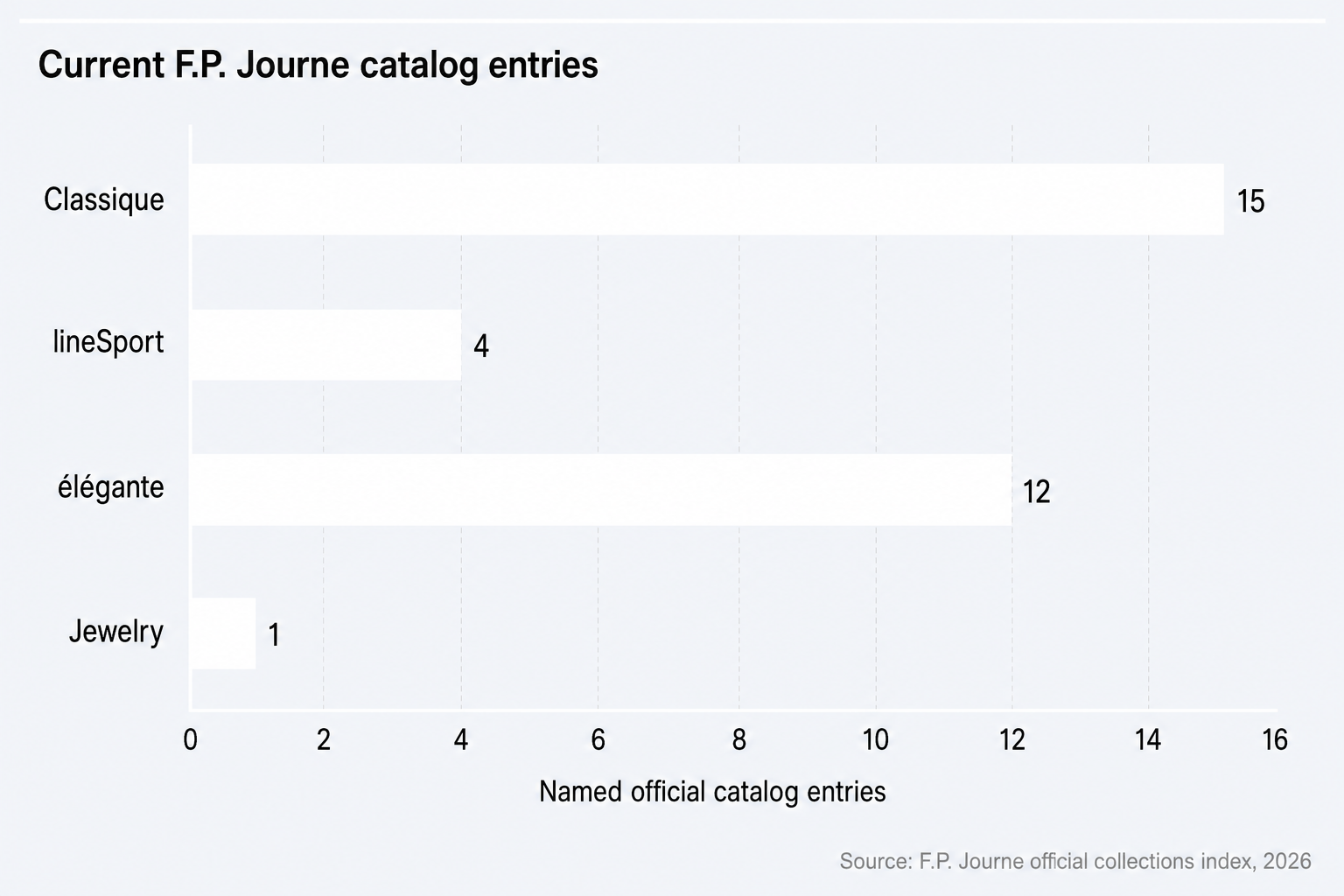
The collection page listed 15 Classique entries, 4 lineSport entries, 12 élégante entries, and 1 jewelry entry when checked on October 18, 2026. These are catalog-entry counts, not production totals, inventory counts, or a measure of relative importance.
The phrase brass movement is another useful example of why production era matters. F.P. Journe’s own historical journal states that approximately 1,500 brass movements were produced from 1999 through the end of production in 2004, before the brand moved to 18K rose-gold movements for its collections. See the brand’s historical account of brass movements for the original context. A brass-movement description therefore points toward a period of production, not to a universal condition grade or value conclusion.
Read the reference as the start of identification, not the end of it.
How much does an F.P. Journe watch cost?
There is no single useful price for an F.P. Journe watch because the range spans quartz models, current mechanical watches, discontinued references, precious-metal complications, and unique pieces. A credible comparison uses like-for-like watches with the same reference family, configuration, condition description, completeness, currency, and sale route.
The official product pages reviewed on October 18, 2026 provide technical specifications rather than a universal global price list. That means a collector should avoid treating a search-result snippet, an old article, or one ambitious asking price as a market-wide answer.
When comparing listings, record the following on the same date:
- Exact reference and stated caliber.
- Case material, diameter, dial, and strap or bracelet configuration.
- Production era where known.
- Condition description, visible wear, and whether the watch has been refinished or serviced.
- Box, papers, accessories, and the wording of the seller’s commercial terms.
- Asking currency, taxes, shipping, and any return conditions.
That method does not produce a price prediction. It prevents a collector from comparing a current-model listing with a historically different watch that only shares part of its name.
The only responsible F.P. Journe price comparison is a same-reference, same-configuration comparison made from current listing details.
Why are F.P. Journe watches so expensive?
F.P. Journe watches combine specialized movements, distinctive cases and dials, complicated mechanisms in some references, and a catalog built around identifiable technical choices. Expense is not explained by one attribute, and it should not be confused with a guarantee of future value.
The technical content is concrete. F.P. Journe specifies that the Chronomètre Bleu uses a tantalum case and an 18K rose-gold manual movement, while the Chronomètre Optimum combines twin barrels, a constant-force remontoire, a patented high-performance bi-axial escapement, and natural dead-beat seconds. The brand’s current Chronomètre à Résonance technical material also describes a twin-balance, dual-display architecture.
Complexity is not automatically the best reason to buy. A collector who prefers a low-profile, time-only watch may find more lasting satisfaction in a Chronomètre Bleu or Chronomètre Souverain than in a more complicated reference. Conversely, a buyer pursuing a particular mechanism may regard the Optimum, Résonance, or high-complication models as the point of the collection.
F.P. Journe watches command attention because their technical and design decisions are unusually specific, not because every reference serves the same collector.
How hard is it to buy an F.P. Journe?
Buying an F.P. Journe can be straightforward when an appropriate dealer listing is available and the buyer has done the necessary research. It can be more difficult when the desired watch is a current boutique-oriented configuration, a discontinued reference, an early-production example, or a watch with a highly specific dial and case combination.
The difficulty has two separate parts. First, locating a watch that matches the intended reference and configuration. Second, establishing whether that individual watch has documentation, condition, and commercial terms that justify pursuing it.
Do not assume that an official current-catalog entry means immediate access to a new example. Likewise, do not assume that an online listing settles the watch’s originality, service history, completeness, or suitability for your collection. Availability changes, and the level of detail varies from listing to listing.
The best preparation is to define the non-negotiables before searching: reference family, case material, diameter, dial, production era, bracelet or strap, and the documents you need to see. That turns a broad hunt for F.P. Journe watches for sale into a search you can evaluate consistently.
Buying difficulty is usually reduced by specificity: know the exact configuration you will accept before you begin contacting sellers.
What should you check before pursuing a listing?
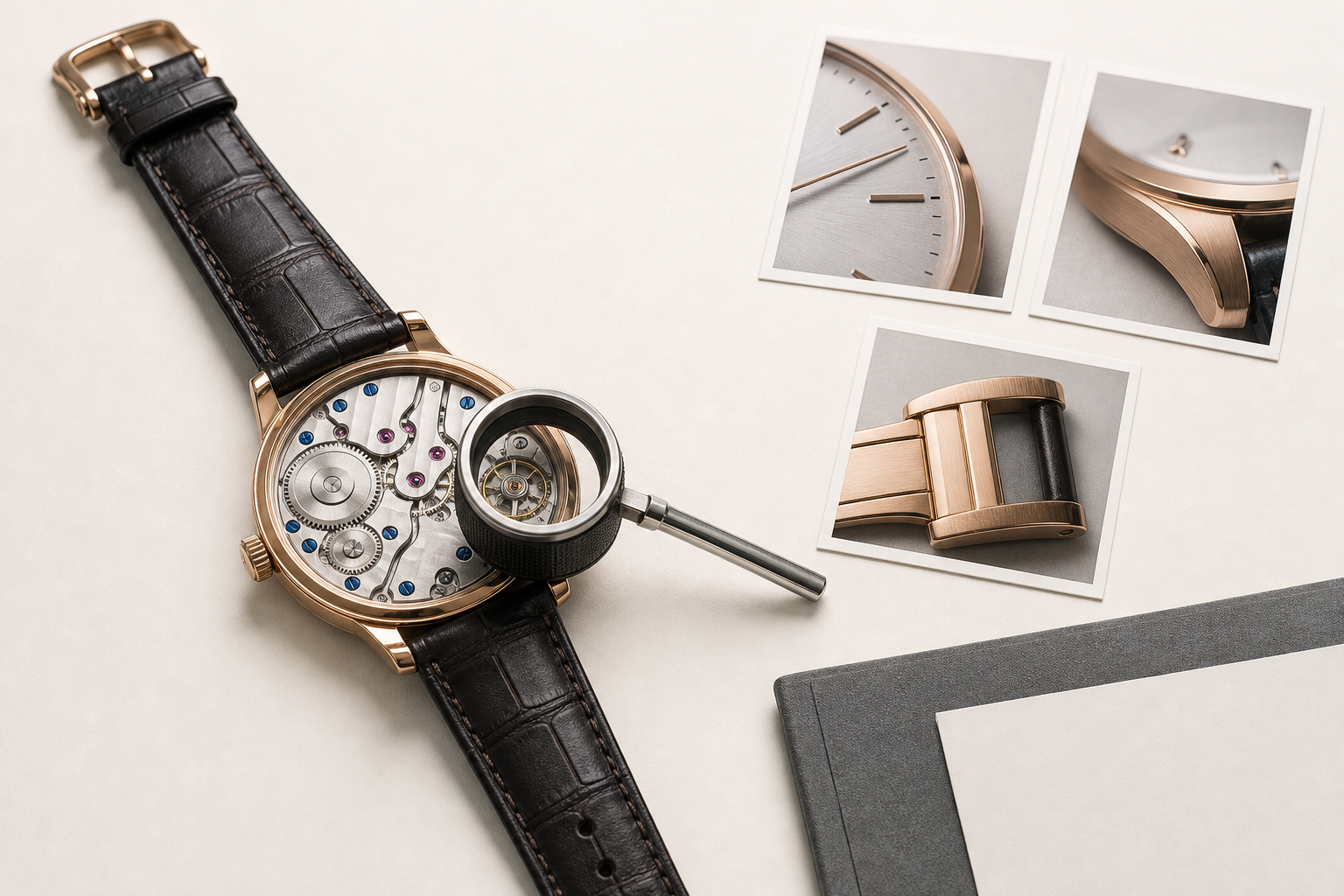
Before pursuing an F.P. Journe listing, compare the listing against the appropriate official reference information and ask for the facts that photographs do not settle. Focus on identity, configuration, condition, completeness, and seller terms before treating a listed watch as a purchase candidate.
F.P. Journe’s official collections page warns collectors about fraudulent items, identifies serial numbers that have been usurped, shows examples of dials not compliant with original production, and states that buyers should not purchase without professional expertise. That warning is a reason to slow down, not a substitute for examining the specific watch.
Use this listing-review sequence:
- Match the reference. Compare the stated reference, caliber, case size, material, dial layout, and functions with the relevant official source.
- Request configuration evidence. Ask for clear images of the dial, caseback, movement where appropriate, clasp or buckle, bracelet links, and any included accessories.
- Read the condition description literally. Separate what the seller states from what the photographs show. Ask about wear, polishing, repair, service, and components that have been replaced.
- Confirm completeness. Establish exactly which papers, box, straps, bracelet links, tools, and service records are included, if any.
- Clarify the commercial terms. Confirm payment method, shipping, taxes, return terms, insurance, and delivery expectations directly with the seller before committing.
- Arrange appropriate independent expertise. High-value collecting decisions deserve specialist input when the watch, documentation, or configuration raises questions.
DreamChrono provides dealer listings and reference-oriented search tools, but it should be treated as a place to find and research offers, not as a replacement for seller-specific due diligence or independent specialist review.
A listing earns further attention only when its reference details, condition evidence, included items, and seller terms all withstand questions.
Frequently asked questions about F.P. Journe watches
How much does an F.P. Journe watch cost?
F.P. Journe watch prices vary substantially by reference, production era, material, complication, condition, completeness, and selling route. The official catalog provides technical specifications but not one universal global price. Compare current listings only after matching the same reference family, configuration, condition description, included items, currency, taxes, and seller terms.
Why are F.P. Journe watches so expensive?
F.P. Journe watches can be expensive because the catalog includes specialized mechanical designs, precious-metal movements in many mechanical references, unusual case materials, distinctive displays, and high complications. The Chronomètre Optimum, for example, combines twin barrels, a constant-force remontoire, and a high-performance bi-axial escapement. Complexity alone does not make every reference equally suitable for every collector.
What watch do billionaires wear?
There is no single watch that billionaires wear, and wealth is not a useful shortcut to choosing an F.P. Journe. A stronger collecting decision starts with the watch’s reference, mechanical format, dimensions, configuration, condition, and provenance. Choose an F.P. Journe because the specific watch fits your collecting priorities, not because of an assumed owner profile.
How hard is it to buy an F.P. Journe?
Buying an F.P. Journe can be difficult when the desired watch is a current boutique-oriented configuration, a discontinued reference, or an early example with a specific dial and case combination. The practical challenge is finding a matching listing, then verifying configuration, condition, documents, accessories, payment, shipping, and return terms before deciding whether to proceed.
Where can you look for live F.P. Journe listings?
Once the reference brief is clear, search live offers by brand, collection, and reference rather than relying on a broad model name. DreamChrono’s Buy Watches marketplace supports filtering by reference, brand, collection, and technical characteristics, allowing a collector to move from a family-level search to the features that matter for a particular watch.
Start with the exact reference where possible, retain the full listing description and photographs for comparison, and contact the dealer only after the watch meets the requirements defined above. A disciplined search makes it easier to recognize a relevant watch when inventory changes.