
In short
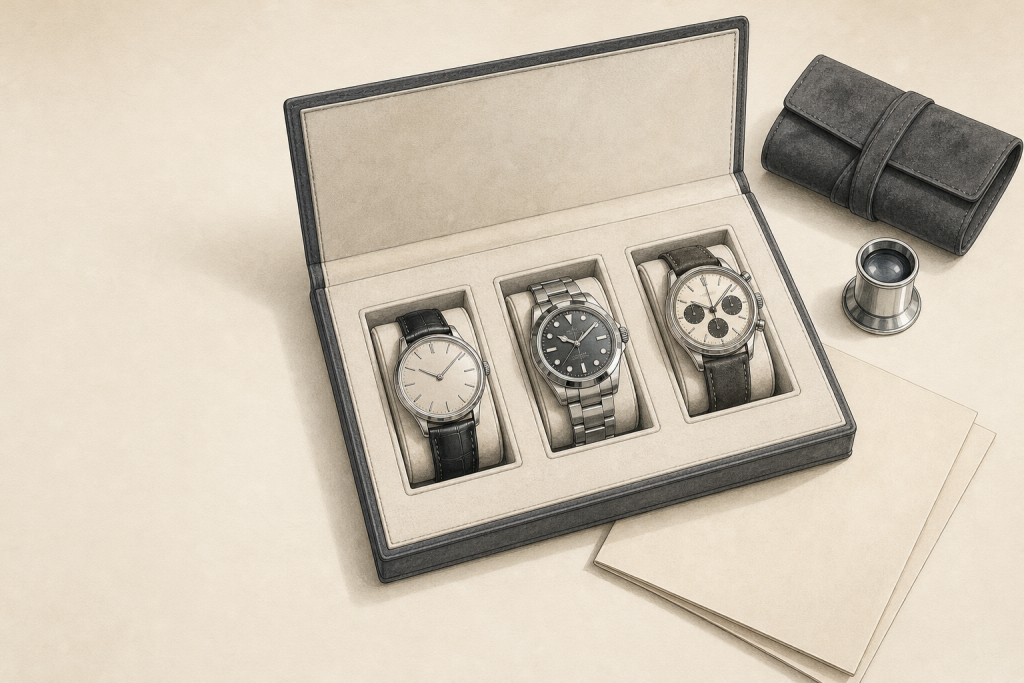
Pre-owned luxury watches are easiest to shop when you start with a precise model or reference, then compare like-for-like listings and examine the dealer’s own condition and authentication information. A specialist marketplace can narrow listings by technical details, but the purchase decision should rest on documentation, condition evidence, terms, and direct dealer answers.
Key takeaways
- Start with a model family or reference, a target size, a movement preference, and a budget before comparing listings.
- Compare watches with the same configuration before using price as a decision point, because materials, bracelets, condition, and included items can differ.
- A box, papers, and service records are useful listing details, but buyers should confirm exactly what is included and what the records show.
- Read the individual dealer’s terms for payment, returns, warranty, delivery, authentication, and condition disclosures rather than assuming marketplace-wide coverage.
Table of contents
- What should you decide before opening listings?
- How do you compare the same model across dealers?
- Which listing details should you verify before you contact a dealer?
- How do you assess the dealer, not just the watch?
- Which pre-owned luxury watch questions do buyers ask most?
What should you decide before opening listings?
Start with a buying brief: the reference or model family, maximum case diameter, movement type, wear tolerance, and budget. A search without those limits often compares watches that look alike but represent different configurations, ages, and conditions.
A model name is a useful starting point, but it can cover multiple case sizes, dial variants, metals, bracelets, and movements. Treat the reference as the identifier that helps separate one configuration from another. If a listing does not state a reference, ask the dealer which exact configuration is being offered before comparing its price with another watch.
Decide which points are fixed and which are flexible. A buyer who needs a compact daily watch may make case diameter non-negotiable. A buyer drawn to a particular dial may accept a different bracelet or a watch without its original box. These choices prevent an attractive photograph from taking over the search.
| Decide before browsing | Why it matters |
|---|---|
| Model family or reference | Keeps comparisons focused on the watch you actually want. |
| Case size and thickness | Helps avoid buying a watch that looks right online but wears differently than expected. |
| Movement and functions | Separates time-only, date, chronograph, dual-time, and other practical needs. |
| Condition tolerance | Sets expectations for polishing, marks, bracelet stretch, and replaced parts. |
| Budget before extras | Leaves room for taxes, shipping, insurance, or future servicing where applicable. |
If the goal is to find an older or discontinued configuration, write down the one or two traits that matter most. That may be a specific dial layout, a particular bezel, or a bracelet style. The more exact the brief, the faster weak matches disappear.
A precise brief turns a broad luxury-watch search into a short list of comparable watches.
How do you compare the same model across dealers?

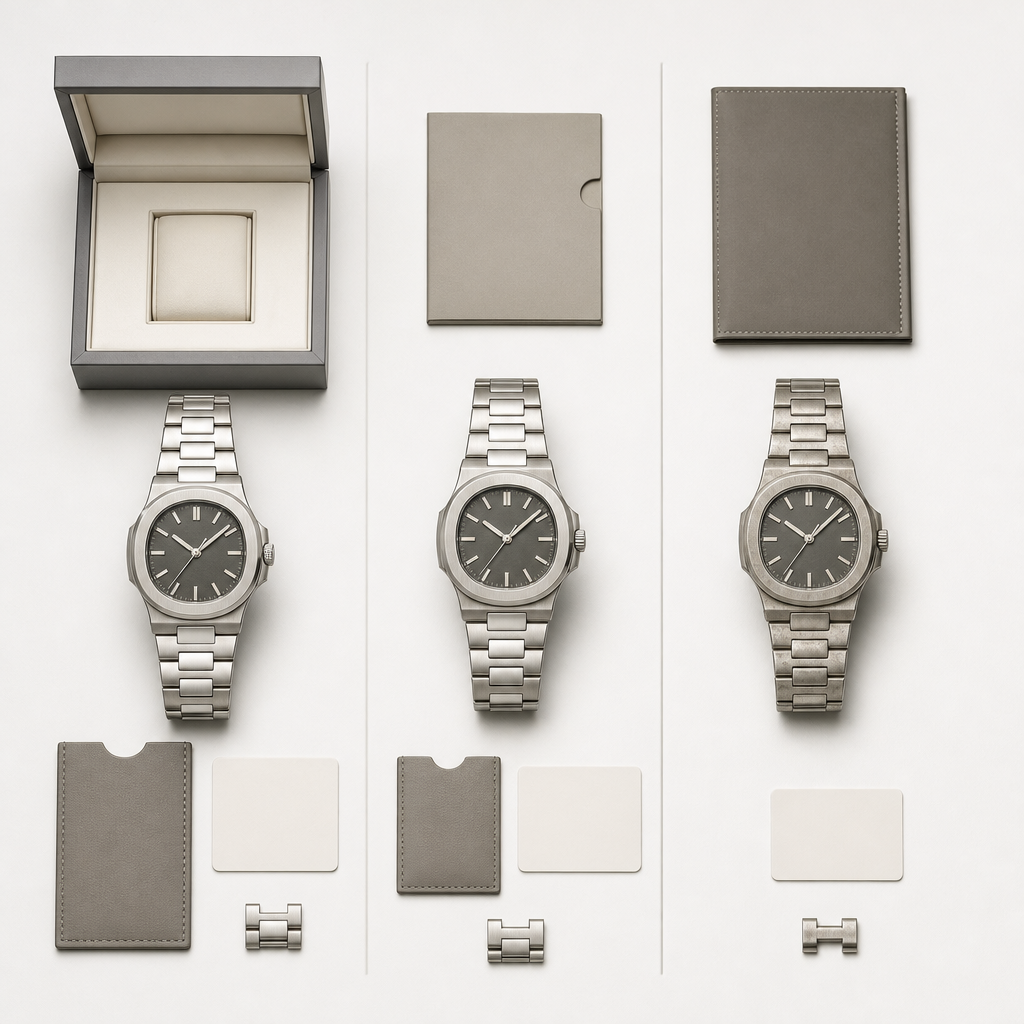
Compare listings only after confirming that the watches are the same reference or genuinely equivalent configuration. Price is meaningful only after the case material, dial, bracelet or strap, condition, included items, and dealer terms are placed side by side.
DreamChrono’s marketplace provides search by reference, brand, and collection, with further filters for characteristics such as shape, diameter, materials, movement, functions, and water resistance. Those fields are useful for building a narrow shortlist, but each dealer listing still needs to be read on its own terms. (dreamchrono.com)
Use a simple comparison note for every serious candidate. It can be a spreadsheet, a saved collection, or a notebook. The format matters less than capturing the same information each time.
- Confirm the configuration. Check the reference, case size, material, dial, movement, and bracelet or strap. A similar model name does not make two watches identical.
- Record the stated condition. Note signs of polishing, scratches, dents, stretched bracelet links, dial damage, moisture marks, and whether the seller identifies any replaced parts.
- List what comes with the watch. Separate the watch itself from a box, papers, extra links, original strap, service documents, and accessories. Do not treat “full set” as a substitute for asking what is physically included.
- Write down the dealer terms. Returns, warranty scope, delivery arrangements, payment methods, taxes, and import costs can change the real cost and the level of recourse available after delivery.
- Keep unanswered questions visible. A lower price may reflect an ordinary difference, such as missing links or a replacement strap, or it may signal that the listing needs more detail. Ask before deciding which is true.
A listing page is most useful when it helps the buyer form specific questions. It is not proof that every missing detail has been checked.
The right comparison is watch against watch, dealer terms against dealer terms, and evidence against evidence.
Which listing details should you verify before you contact a dealer?

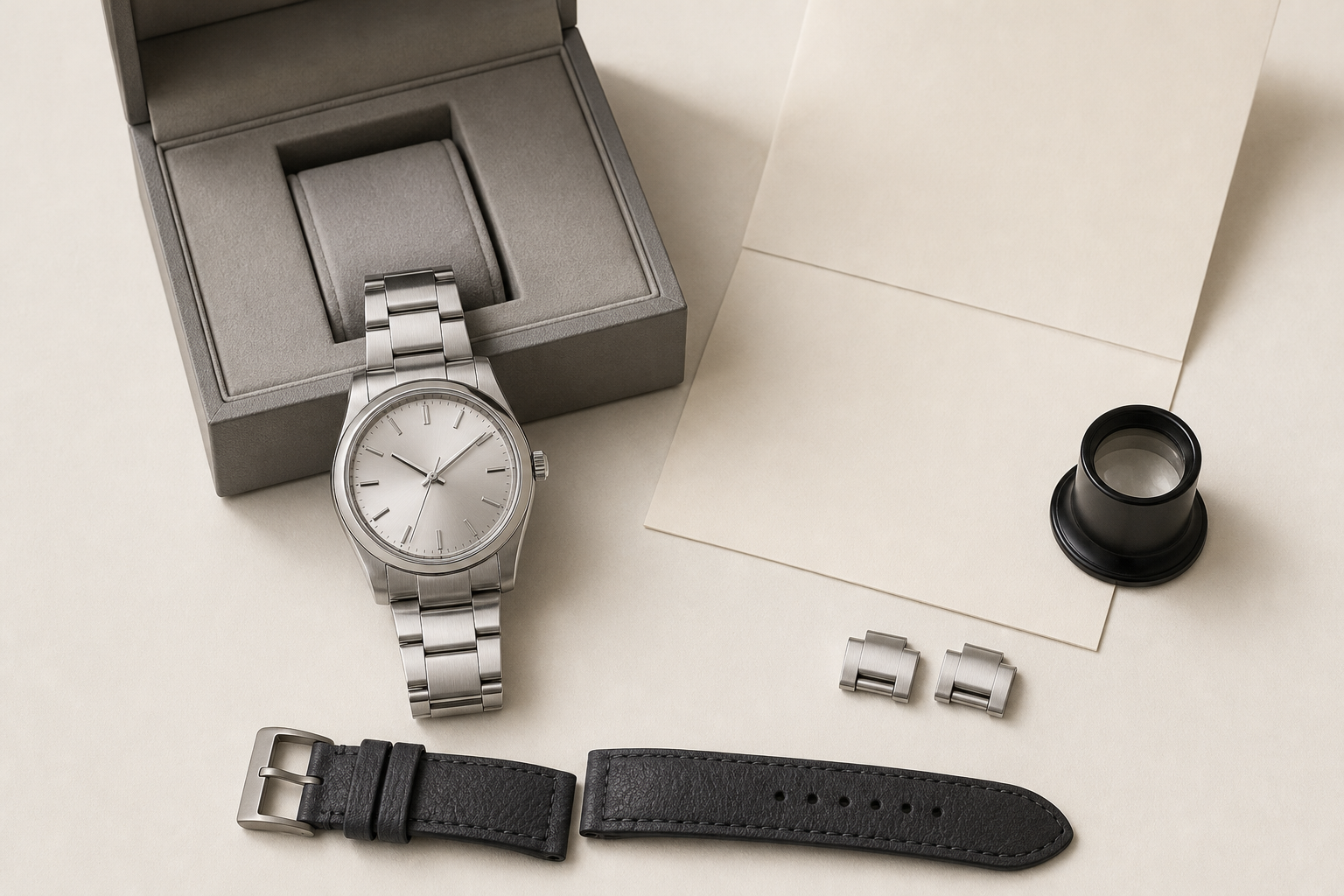
Verify the details that could change identity, condition, completeness, or ownership history before moving from browsing to purchase discussions. Ask for clear answers in writing and keep a copy of the listing as it appeared when you contacted the dealer.
Check the watch’s identity
Ask the dealer to confirm the reference and the configuration being sold. If the watch has a special dial, bezel, bracelet, or limited-run feature, ask whether that component is original to the watch and how the dealer identified it. A listing photo can show appearance, but a direct answer makes the point part of the buying record.
Ask what condition language means
Words such as “excellent,” “very good,” and “worn” are not standardized measures. Ask what the dealer observed: polishing, marks around the lugs, wear to the bracelet, crystal damage, changes to the dial or hands, and any known performance issue. Request recent close photographs of the areas that matter to you.
Separate service history from a service claim
A service document can help explain when work was carried out, but it should be read for its scope. Find out whether work involved routine maintenance, replacement parts, cosmetic refinishing, water-resistance testing, or a more extensive repair. If no service documentation is available, that is information to factor into the purchase rather than a reason to invent a history for the watch.
Confirm what is included
“Box and papers” can mean different things. Ask which documents are present, whether extra bracelet links are included, and whether any pictured accessory is part of the sale. This matters especially when fit, provenance, or long-term collectability affects the buyer’s decision.
Read terms before payment
The dealer’s own payment, return, warranty, shipping, insurance, tax, and import terms should be available before funds are sent. Do not assume that a dealer’s assurances, or a marketplace’s search features, apply uniformly to every seller and every listing.
A careful buyer verifies the points that cannot be recovered from a single product photograph.
How do you assess the dealer, not just the watch?
A strong listing can still be incomplete if the dealer’s identity, terms, and communication are unclear. Assess the seller as a separate part of the transaction, using the same patience applied to the watch itself.
Start with the dealer profile and the practical information shown there. Look for a clear business identity, contact route, location where stated, and a consistent presentation of inventory. Then read the terms that govern the specific purchase, not only broad promotional language.
Useful questions include:
- Who inspected the watch, and what did that inspection cover?
- What condition issues, replaced parts, or service work are known?
- Which items shown in photographs are included in the sale?
- Which payment method is requested, and when does ownership transfer?
- What are the return, warranty, shipping, insurance, tax, and import terms for this transaction?
- Can the dealer answer the same question consistently by message or email?
Communication is evidence too. A dealer does not need to make a watch sound perfect. A useful response is specific about what is known, clear about what is not known, and willing to identify the terms that apply. Keep messages, invoices, photographs, and any agreed details together after the purchase.
The dealer’s clarity about the transaction matters as much as the listing’s clarity about the watch.
Which pre-owned luxury watch questions do buyers ask most?
The best answers are usually practical rather than universal: choose a platform that helps you find a relevant watch, then judge the individual listing and dealer on the evidence available. Pre-owned purchasing is strongest when the buyer knows what must be confirmed before payment.
What is the best preowned luxury watch site?
There is no single best preowned luxury watch site for every buyer. A useful site lets you narrow models by reference or technical details, see who is offering the watch, and review enough listing information to ask informed questions. The final choice should depend on the exact watch, dealer terms, condition evidence, and delivery route.
Is it better to buy luxury watches pre-owned?
Buying a luxury watch pre-owned can be a good choice when the desired watch is discontinued, already configured as you want it, or unavailable through a new-watch route. The trade-off is that condition, included items, and service history vary from listing to listing, so each watch needs individual review.
What are the best pre-owned watches to buy?
The best pre-owned watch is the one with a configuration, size, condition, and ownership story that fit the buyer’s purpose. Start with a reference or model family, then compare equivalent listings rather than following a generic popularity list. A clear condition description and dealer response are more useful than a fashionable label.
A good pre-owned purchase is defined by a verified match between the watch, the listing evidence, and the dealer’s written terms.
When the shortlist is ready, browse current pre-owned luxury-watch listings on DreamChrono by reference, brand, collection, and technical characteristics, then contact the dealer with the unanswered questions from your comparison note.