DreamChrono is a watch marketplace where buyers can search current listings from professional dealers by reference, brand, collection, and technical details such as case size, movement, functions, and water resistance. Use the marketplace to find available watches, then use reference data and listing details to decide what to verify before contacting a dealer.
Key takeaways
A reference number is the most precise starting point when a specific watch model is already known.
DreamChrono’s marketplace can be narrowed by brand, collection, case details, movement, functions, diameter, materials, and water resistance.
A live listing and a watch-model record answer different questions: one shows availability, while the other helps identify the watch.
Buyers should confirm condition, completeness, seller terms, payment method, shipping, and return terms directly with the dealer before committing.
DreamChrono lists watches from professional dealers, but buyers should not assume the platform provides escrow, platform-operated authentication, valuation tools, or an auction process.
A good watch marketplace search is not only about scrolling through photos. It is a way to move from a rough idea, such as “a steel chronograph with a black dial,” to a model that fits your requirements and a dealer listing worth investigating.
That distinction matters. A marketplace listing can tell you what is available now. A model record can help you understand what the watch should be. Keeping those two jobs separate makes it easier to ask better questions before money changes hands.
What can you search in DreamChrono’s watch marketplace?
A marketplace search can begin with a reference or become more specific through technical filters.
DreamChrono’s Buy Watches marketplace supports searches by reference number or name, plus brand and collection. Its live filters also cover physical and technical characteristics, so the search can start broad or become very specific.
The current marketplace interface includes filters for shape, dial color, power reserve, diameter, materials, functions, complications, case construction, frequency, jewels, bezel, clasp, water resistance, indexes, winding, crystal, bracelet, caliber, and movement. Availability changes as dealers add or remove watches, so the filters are a better guide to the type of inventory you can search than a promise that a particular model will always be listed.
Start with the most reliable piece of information
If you know the reference number, enter it first. A reference usually identifies a particular configuration more precisely than a collection name, which may contain different case sizes, dial variants, materials, movements, and generations.
If the reference is unknown, start with the brand and collection. Then add only one or two filters that are non-negotiable, such as 36 mm to 40 mm diameter, automatic movement, a date display, or a steel bracelet. Adding every preference at once can hide a watch that is nearly right but described differently by the dealer.
Use technical filters to eliminate poor fits
Technical filters work best after the first results page. For example, a buyer who likes a collection but needs a practical daily watch might narrow results by case size, water resistance, sapphire crystal, or automatic winding. A collector looking for a complication can filter for a chronograph, second time zone, moonphase, or power-reserve indication.
The goal is not to prove that one specification is universally better. It is to make the shortlist reflect how the watch will actually be worn, collected, or compared.
A useful marketplace search starts broad enough to reveal options, then becomes precise enough to exclude watches that do not meet the buyer’s real requirements.
How do you narrow the search without losing the right watch?
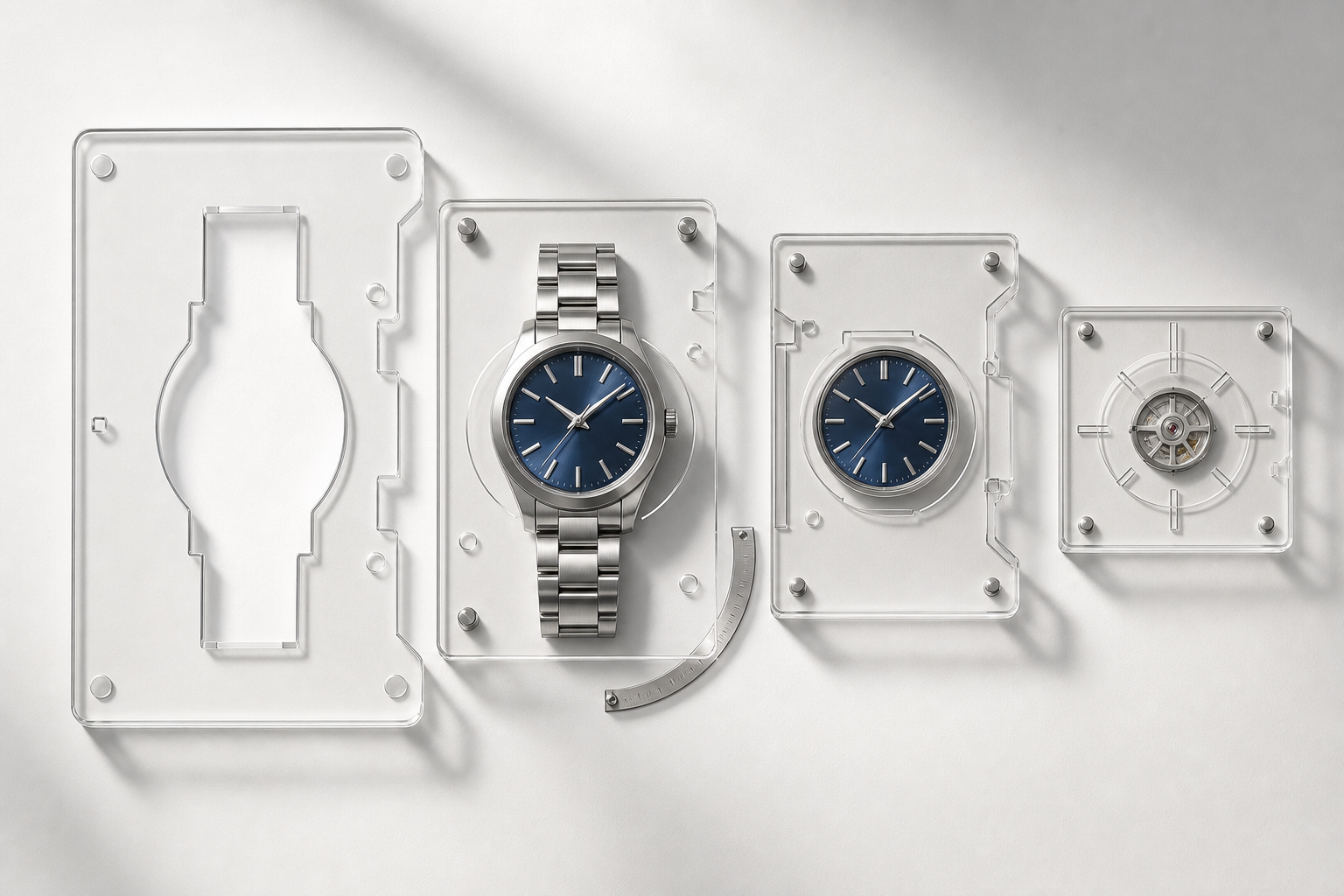
Narrow a watch search in stages: identify the model family, define the physical fit, then filter for the technical details that matter. This sequence prevents a buyer from mistaking a general collection name for one exact reference.
Begin with the information you can trust. A reference is best. A full model name is next. A brand and collection are useful when the exact reference is still unknown.
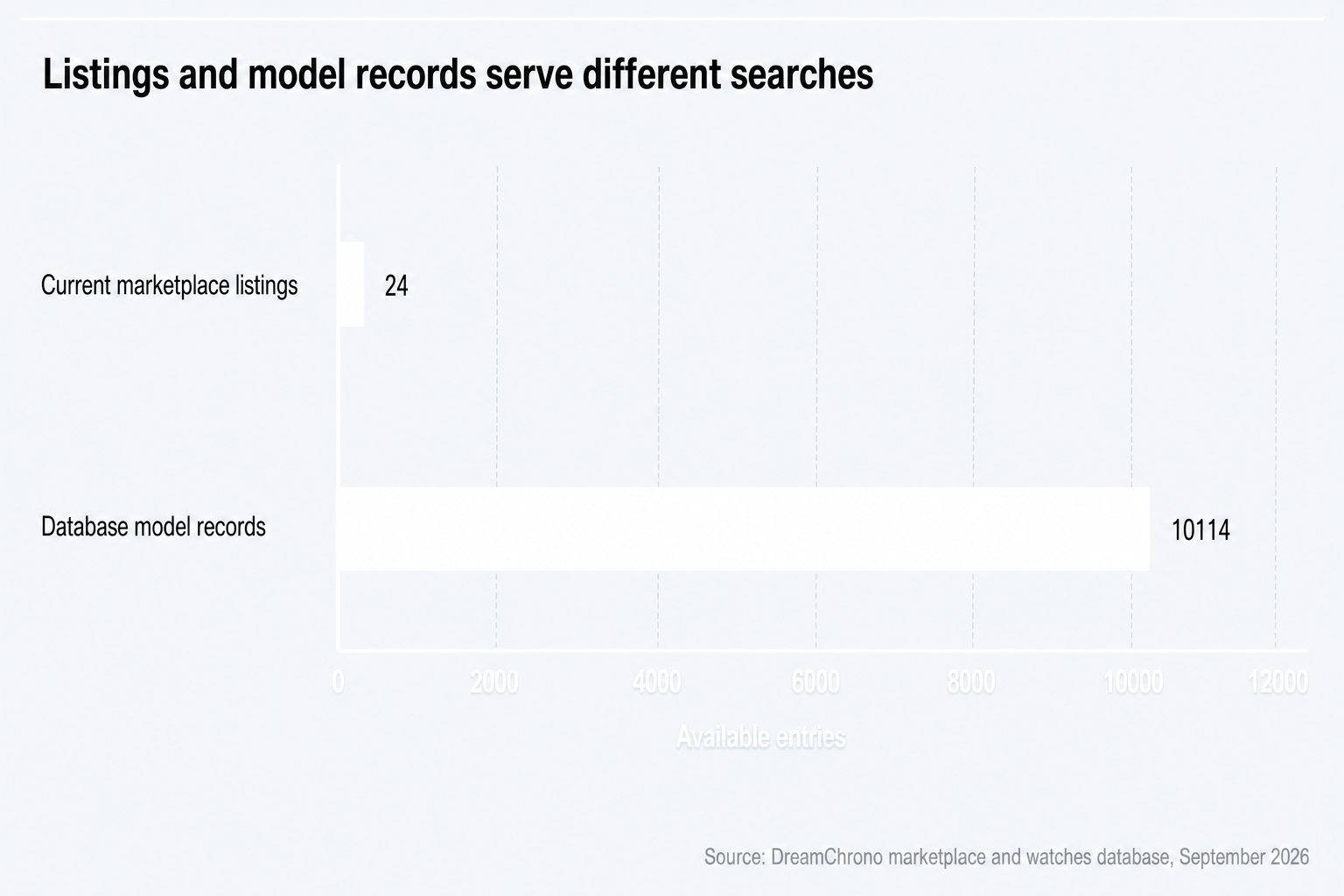
DreamChrono’s current marketplace and database counts show different scopes, not a comparison of value, quality, or price. Source: DreamChrono, September 2026.
A four-pass search method
Find the family. Search the brand and collection to see the range of watches that share a design language or model name.
Set the fit. Filter diameter, shape, material, bracelet or strap, and water resistance according to how the watch will be used.
Set the mechanism. Choose quartz, mechanical, or automatic movement, then look for functions such as a date, chronograph, or second time zone.
Confirm the reference. Open the individual result and compare the reference, caliber, dimensions, and visible configuration against a dependable model record.
A 40 mm watch with an automatic caliber and date display may sound specific, but many watches can match that description. The reference separates a near match from the intended model.
The shortest route to a credible shortlist is brand or reference first, fit second, technical features third, and listing-level confirmation last.
What should you verify before contacting a dealer?
Before contacting a dealer, check the listing’s identity, condition description, included items, commercial terms, and practical delivery details. A marketplace listing is a starting point for due diligence, not a reason to skip it.
DreamChrono’s marketplace connects buyers with professional dealer listings and supports direct customer communication. The accessible marketplace pages do not describe a platform-held escrow program, platform-operated authentication or condition testing, price-history analytics, auction bidding, or a direct-buyout service. Buyers should therefore ask the dealer how the specific transaction will be handled rather than assuming a service is included.
Check before contact
Why it matters
A useful question for the dealer
Exact reference and configuration
Similar-looking versions can have different movements, sizes, metals, or production periods.
“Can you confirm the full reference shown on the watch or paperwork?”
Condition and recent work
Polishing, replacement parts, and servicing can affect collectibility and future maintenance.
“What condition issues, replacement parts, or service work should I know about?”
Box, papers, and accessories
Completeness can affect provenance, use, and resale interest.
“Which original documents, boxes, links, straps, or accessories are included?”
Price, currency, and taxes
The displayed figure may not be the buyer’s total cost.
“Does the quoted price include taxes, duties, shipping, and insurance?”
Payment and delivery terms
These terms determine who carries risk and what happens if a problem arises.
“Which payment method, shipping service, insurance, return terms, and dispute process apply?”
A close reading of photos is useful, but photos do not replace written confirmation. If a detail matters to the purchase decision, ask for it in writing before payment.
Buyers should treat the dealer’s written answers on reference, condition, included items, payment, shipping, and returns as part of the purchase decision.
What does the watch database add to a marketplace search?
Model research helps turn a familiar collection name into a specific watch reference.
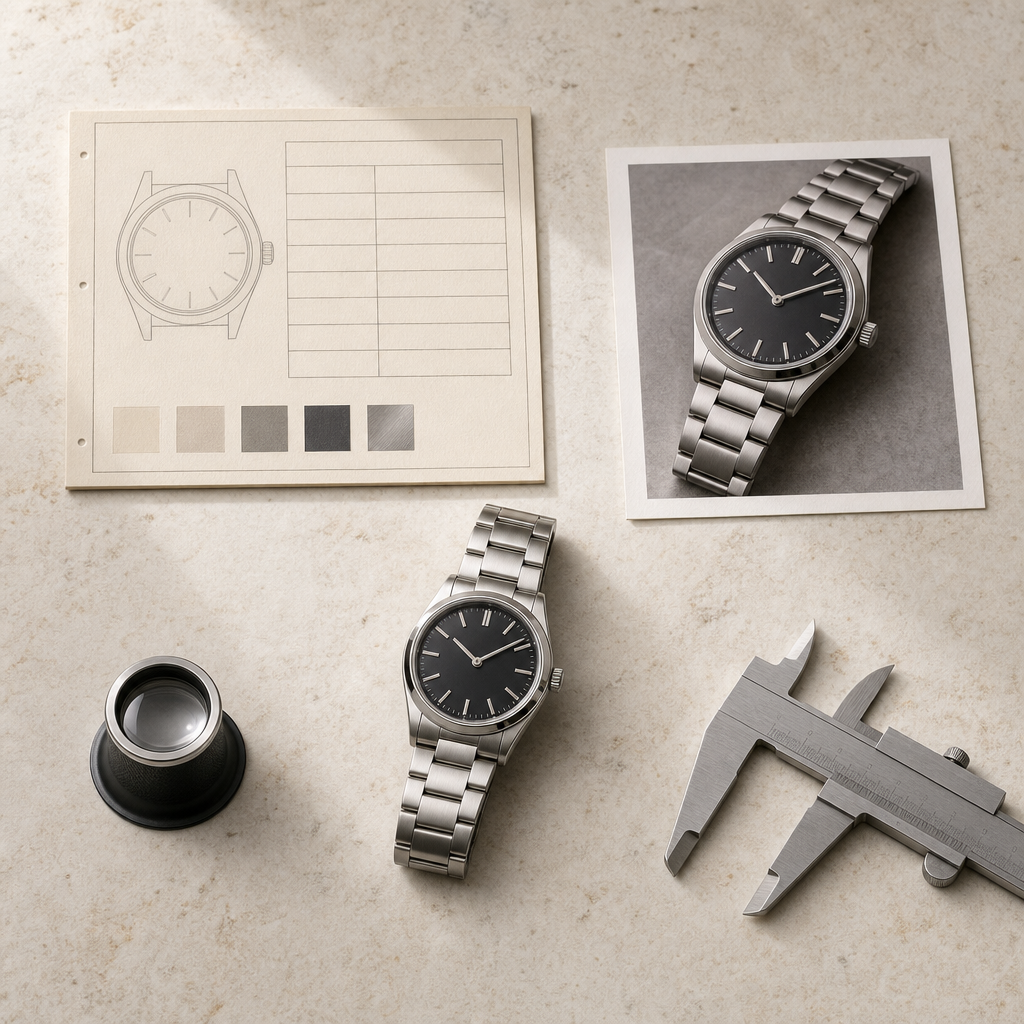
A watch database helps identify and compare models, while a marketplace helps locate watches currently offered for sale. Using both reduces the chance of shopping for the wrong version of a familiar-looking watch.
DreamChrono’s watch database explains how brand, collection, reference, and specification data can be used to research a watch before a purchase. The live database page currently presents searchable records by reference, brand, and collection, alongside a broad list of brands and model entries.
Use the database before treating a listing title as final
A listing title may be concise. It might name a collection but omit a suffix, a case diameter, a material, or a caliber. Reference research can reveal that two watches with nearly identical names are not interchangeable.
Compare the available listing information against the model record:
Reference number and collection name
Case diameter and case material
Movement or caliber
Dial and bezel configuration
Functions and complications
Water resistance and crystal type
Bracelet, strap, clasp, and included links where relevant
Research is especially valuable for discontinued, vintage, or multi-generation models. The more versions a collection has produced, the less useful a broad name becomes on its own.
For a model-led example of this process, read the guide to is Seiko Presage worth buying before deciding which reference and configuration belongs on a shortlist.
A database does not replace inspection or dealer documentation, but it gives buyers a clearer standard for the questions they should ask.
Can professional dealers list watches on DreamChrono?
Yes. DreamChrono’s dealer offering is designed for professional sellers who want a store profile, marketplace exposure, direct customer communication, and control over their own listing prices.
According to the current Sell Watches page, professional dealers can create a profile, publish listings to the marketplace and watch database, communicate directly with customers, and set their own prices. The page also describes a database-led workflow in which dealers can search by reference or brand and collection to pre-fill technical features, with data-entry support available when a watch is not already present.
For buyers, that means a listing can be the beginning of a direct discussion with a specialist seller. For dealers, it means less repetitive technical entry when an existing model record can supply the basic specification framework.
What buyers should not infer from a dealer listing
A professional dealer listing is useful, but it does not remove the need to review the individual seller’s terms. Ask how the dealer describes condition, how shipping is insured, which payment routes are accepted, and what return or dispute process applies.
Do not infer that all marketplace transactions include the same protections. The terms that matter are the terms offered for the specific watch and confirmed by the dealer.
A dealer marketplace works best when accurate model data makes listings easier to compare and direct communication makes transaction terms clear.
Frequently asked questions
What is the best site to buy used watches?
The best site to buy used watches is the one that lets a buyer identify the exact watch, examine clear listing details, contact a credible seller, and understand payment, shipping, taxes, and return terms before purchase. DreamChrono is useful when the buyer wants dealer listings plus reference-led search by brand, collection, reference, and technical attributes.
What is the best marketplace to sell watches?
The best marketplace to sell watches depends on who is selling and how much control the seller needs. DreamChrono’s professional dealer route is designed for dealers who want their own store profile, marketplace visibility, direct communication with customers, seller-set pricing, and technical listing data that can be pre-filled from watch references.
How is the watch market right now?
The watch market cannot be summarized accurately without a dated source, a defined set of brands or references, and a clear distinction between asking prices and completed sales. DreamChrono’s marketplace is built for browsing dealer inventory and technical model research, not for market-price history, valuation estimates, or portfolio analytics.
Ready to search by reference, brand, or feature?
Start with the watch detail you know best, then narrow the search only after you can see the available model families. Reference numbers, dimensions, movements, and listing terms are not minor details. They are the information that turns a promising watch into a purchase decision.
Use DreamChrono’s marketplace to browse current dealer listings, and use the model data behind the search to make each conversation with a dealer more precise.