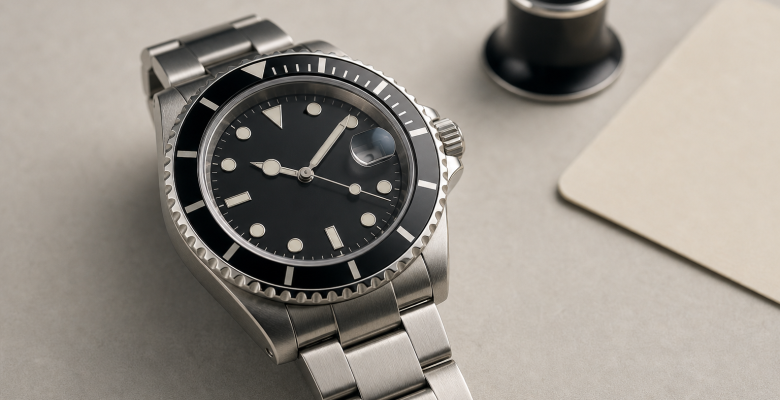
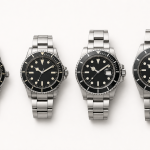
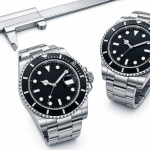
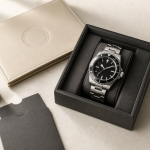
The Rolex Submariner 16610 is a discontinued 40 mm steel dive watch made from 1988 to 2010, powered by Rolex caliber 3135 and fitted with a black aluminum bezel insert. Before buying one, identify its production era, inspect originality and condition, and compare the seller's documentation rather than judging the watch by its reference number alone.
Key takeaways
The Rolex 16610 was produced from 1988 to 2010, so examples under the same reference can differ materially in lume, bracelet construction, case details, and dial features.
Every standard 16610 uses Rolex caliber 3135, an automatic movement with a date display and approximately 48 hours of power reserve when healthy and fully wound.
Early tritium examples, later luminous-material changes, drilled lugs, solid end links, and engraved rehauts can help place an individual watch within the production run.
A faded bezel, replacement dial, polished case, or missing documentation is not automatically a reason to reject a watch, but each detail should affect the comparison and price discussion.
A Rolex 16610 is a collectible watch, not a guaranteed investment, so buy the condition and configuration you want to own.
The Rolex 16610 is the steel Submariner Date reference from the brand's five-digit era. It combines a 40 mm Oyster case, black dial, black aluminum bezel insert, sapphire crystal with date magnifier, 300 m or 1,000 ft water-resistance rating, and automatic caliber 3135.
Reference histories place the 16610's production run from 1988 through 2010, when the ceramic-bezel 116610 succeeded it. Fratello's Submariner history identifies 1988 as the start of the 16610 and records caliber 3135 as its movement. Auction catalog descriptions from Sotheby's also identify the reference's 300 m depth rating, sapphire crystal, Cyclops date lens, quick-set date, and caliber 3135 movement.
Rolex 16610 core specifications
Detail
Rolex Submariner 16610
Production period
1988 to 2010
Case
40 mm stainless steel Oyster case
Water resistance rating
300 m / 1,000 ft when new and properly maintained
Crystal
Sapphire with Cyclops date magnifier
Bezel
Unidirectional timing bezel with black aluminum insert
Movement
Rolex caliber 3135 automatic movement
Date
Quick-set date at 3 o'clock
Typical power reserve
Approximately 48 hours in a healthy, fully wound example
The reference sits in an appealing middle ground for many buyers: it has the practical specification of a modern dive watch, but its slimmer case profile and aluminum bezel carry a visibly older Submariner character. The 16610 is not one fixed configuration, however. Production changes matter.
A Rolex 16610 should be assessed as a specific production-era watch, not as a generic steel Submariner.
Which Rolex 16610 version should you look for?
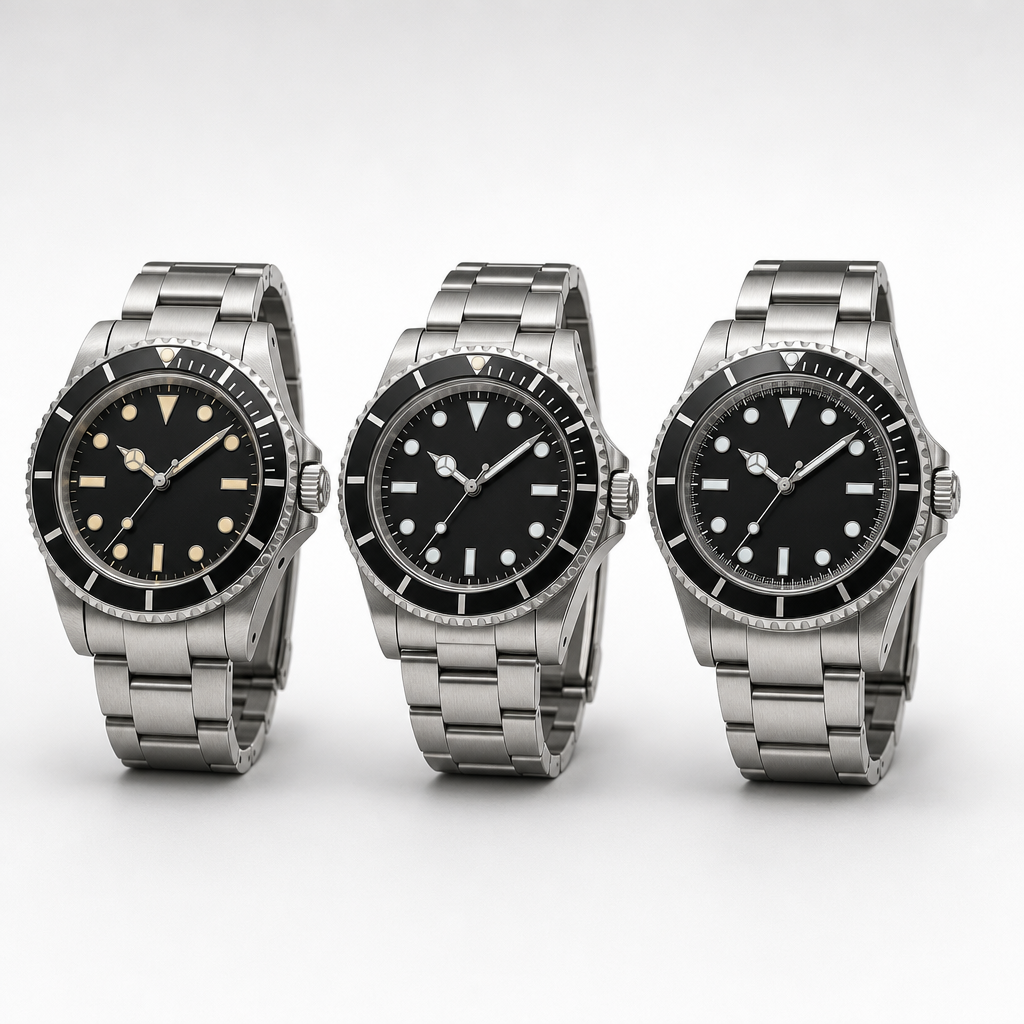
Early, middle, and late 16610 examples can look similar at a distance but differ in collector-relevant details.
The best Rolex 16610 version depends on whether the priority is early-era character, an everyday-wear configuration, or late-production refinements. Start by deciding which details matter to you, then confirm that the dial, hands, bezel, bracelet, and case are consistent with the watch's approximate era.
Early examples are generally associated with tritium luminous material and drilled lug holes. Tritium dials may develop warm cream-colored plots or remain relatively pale, while matching hands and dial are often more important than an artificially uniform appearance. Age-related lume change is not automatically a defect, but it should be documented clearly in photographs.
Middle-period examples moved through luminous-material and bracelet changes. This is the broadest part of the production run, so it rewards close comparison. A seller should be able to show the dial text, hand lume, end links, clasp code where available, and the case sides without relying on stock photography.
Later examples are commonly sought by buyers who want more contemporary construction while retaining the aluminum bezel and older case proportions. Later watches may have solid end links, no drilled lug holes, an engraved rehaut, and Super-LumiNova. These features can be useful dating clues, but they are not a substitute for checking the individual watch.
Do not confuse the standard black-bezel 16610 with the 16610LV anniversary variation, introduced in 2003 with a green aluminum bezel and larger hour markers. The extra letters matter: a listing described simply as “16610” should be verified against photographs and the seller's paperwork.
The right 16610 is the one whose period-correct details, condition, and ownership history match what you value most.
What should you inspect before buying a Rolex 16610?
Ask for close photographs of the parts that establish condition and production-era consistency.
Inspect the watch in four layers: identity, originality, physical condition, and running condition. A strong listing makes those layers easy to examine with clear photographs, a precise description of service work, and a seller willing to answer reference-specific questions.
1. Confirm the identity
Check that the listing identifies the watch as a Submariner Date reference 16610 rather than a no-date Submariner or a 16610LV. The serial number can assist with approximate dating on older examples, but it does not prove that every fitted component left the factory with the watch. A serial range is one clue, not a complete provenance record.
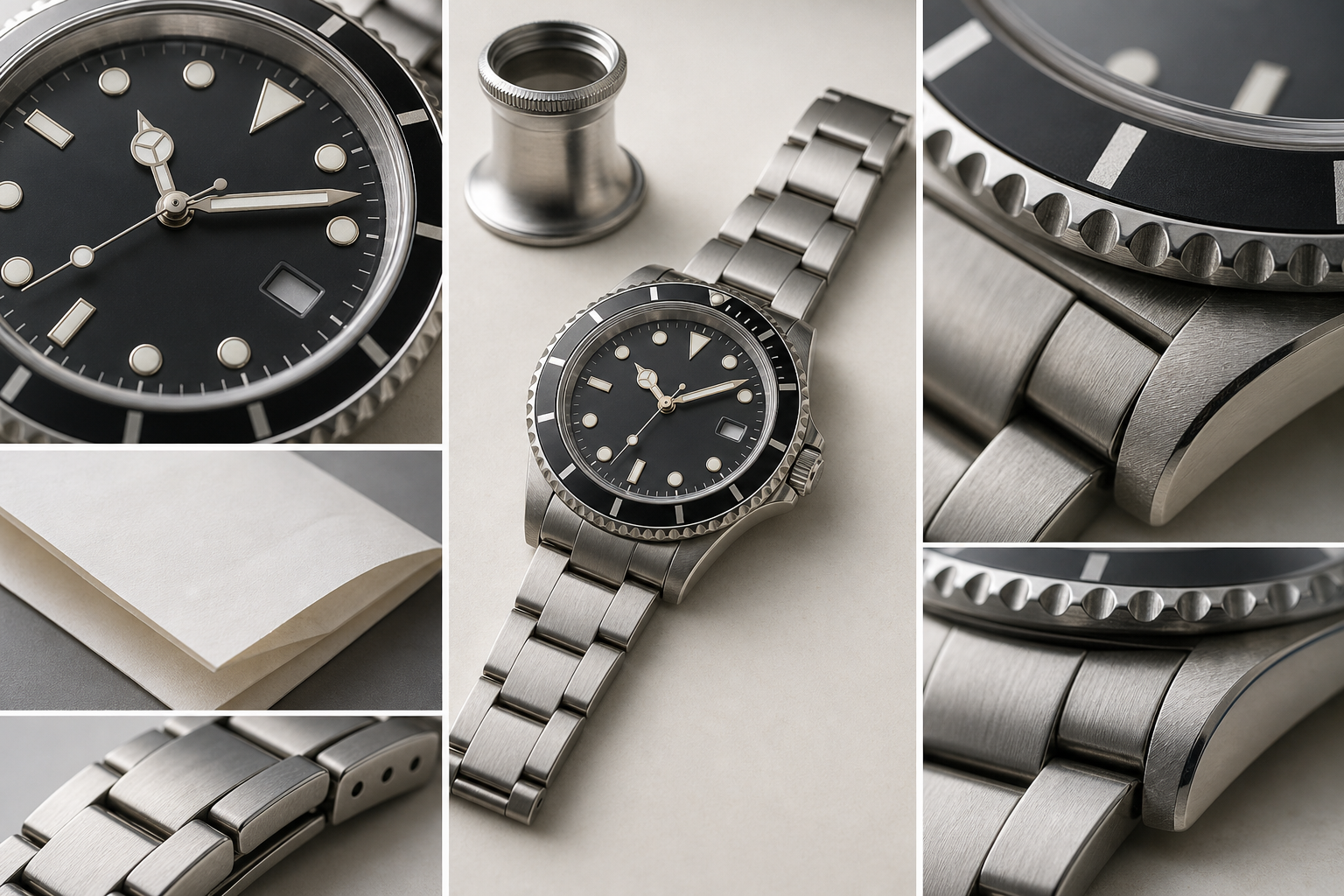
2. Examine dial, hands, bezel, and crystal together
Look for consistency between the dial's luminous material and the hands. A dial or hand set replaced during service can be genuine, functional, and attractive, but it may change collector appeal. Hodinkee's vintage Rolex buying guidance notes that a later service dial can be authentic while still reducing interest for a buyer seeking original period components.
The aluminum bezel insert deserves its own review. Scratches, fading, and small marks are common on a watch of this age. Ask whether the insert is original, replaced during service, or aftermarket. The same question applies to the bezel pearl, crown, crystal, and bracelet.
3. Look at the case shape and bracelet wear
Request straight-on photographs of both case flanks, the lugs, crown guards, bracelet, clasp, and end links. Heavy polishing can soften the original lug definition. Bracelet stretch should be judged from clear photos and handling where possible, not from a single angled wrist shot.
4. Ask about service and water resistance
A 16610 was rated to 300 m when new, but a decades-old watch should not be assumed water-resistant without recent pressure-test evidence. Ask when it was last serviced, who performed the work, which parts were replaced, and whether a current water-resistance test is documented. The movement's condition matters more than a claim that the watch “runs well.”
For a pre-owned Rolex 16610, originality and mechanical condition must be evaluated separately because a watch can be genuine yet heavily serviced, polished, or assembled from period-mismatched parts.
How should you compare current pre-owned Rolex 16610 listings?
Compare evidence across condition, originality, documentation, and seller information before comparing prices.
Compare complete listings, not headline prices. A lower-priced example may need servicing, lack original components, show significant bracelet wear, or have limited documentation, while a higher-priced example may include a stronger condition report and clearer history.
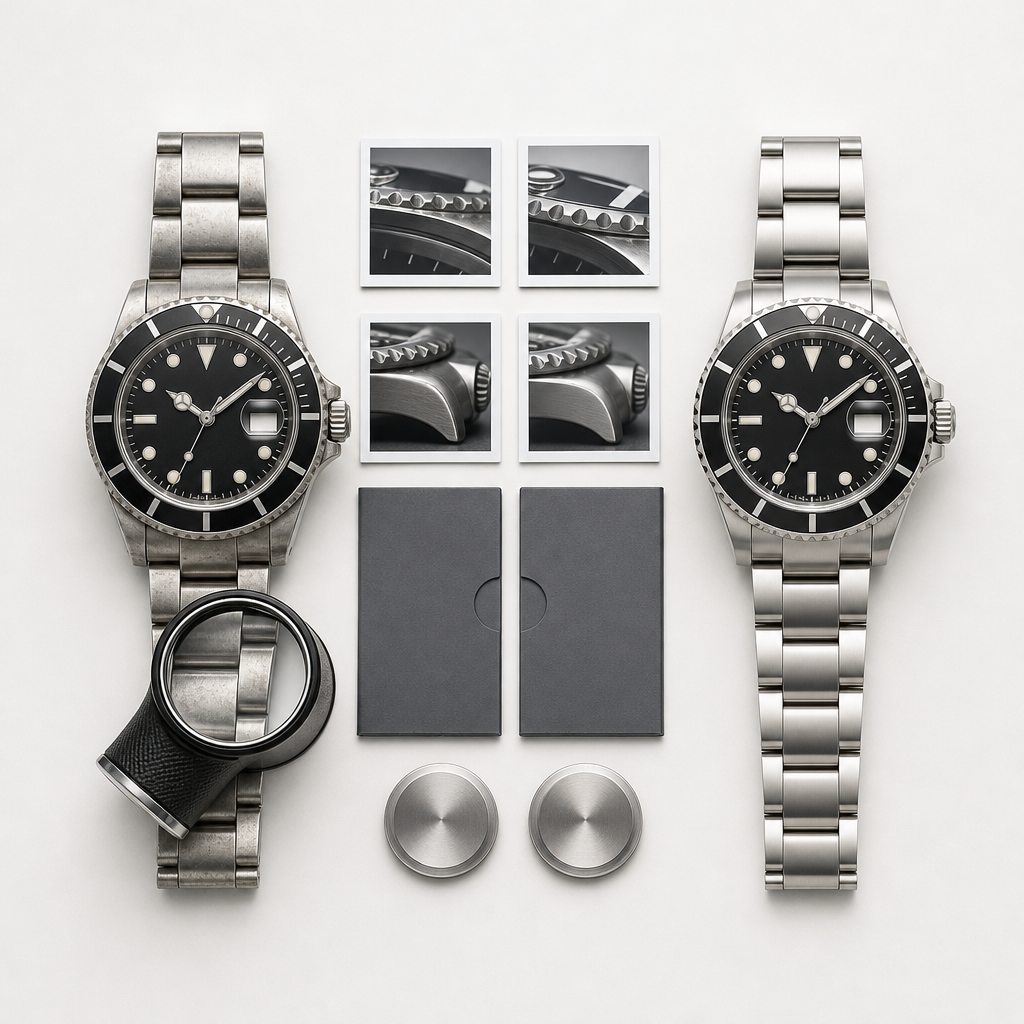
Begin with filters that narrow the field to the exact reference, steel case, date display, and preferred condition. Then create a short comparison list using the same five fields for every watch:
Production-era clues: lume type, drilled or no-hole case, bracelet and end-link style, and rehaut treatment.
Condition: case edges, bezel insert, crystal, dial, hands, bracelet wear, and signs of polishing.
Originality: disclosed replacement parts, period-correct component pairing, and whether service parts are included with the sale.
Documentation: box, card or papers where available, service records, invoices, and timing or pressure-test results.
Seller information: detailed photographs, responsive answers, return terms, and whether the description distinguishes verified facts from assumptions.
A Rolex 16610's worth cannot be reduced to one number because condition, originality, accessories, service history, and local demand all change the comparison. Do not pay a premium for an alleged rare variation unless the seller can show the defining detail clearly and explain how it was identified.
Buyers who want to compare available watches can browse current dealer listings on DreamChrono by reference and technical attributes, then ask each seller the same documentation and condition questions. For a wider view of how a Rolex reference fits within the brand's catalog, see our guide to Rolex 1908.
The most useful listing is not the one with the most persuasive description; it is the one that gives enough specific evidence for you to compare it fairly.
What else do buyers ask about the Rolex 16610?
These questions come up repeatedly because the 16610 ran for more than two decades and remains widely traded pre-owned. The answers below explain what can be established from the reference and what still requires inspection of the individual watch.
What year is the Rolex 16610?
The Rolex Submariner Date 16610 was produced from 1988 to 2010. A specific 16610 can be dated only approximately from serial-era clues and production details, because watches may have been sold after manufacture and may have received replacement components during later service. Use serial information alongside dial, bracelet, and case features.
How much is a Rolex 16610 worth?
A Rolex 16610's value depends on the exact example rather than the reference alone. Original dial and hands, case condition, bracelet condition, service history, accessories, production-era details, and seller documentation can all affect the asking price. Compare like-for-like listings and avoid treating an advertised price as a completed-sale value.
Is a Rolex 16610 a good investment?
A Rolex 16610 may retain collector interest, but it is not a guaranteed investment. Pre-owned watch values can rise or fall, and service needs, condition changes, market demand, and transaction costs affect the outcome. Buy a 16610 because you value its design and configuration, then treat any future appreciation as uncertain.
How long will a Rolex run without wearing it?
A healthy Rolex 16610 with caliber 3135 typically has about 48 hours of power reserve after being fully wound. Actual running time can be shorter if the watch needs service or has not been fully wound. If the watch stops much sooner than expected, request a watchmaker's assessment rather than assuming normal behavior.
A precise reference guide helps, but the seller's evidence for the individual watch remains the deciding factor.
What should you do before committing to a Rolex 16610?
Before committing, decide which production-era details matter to you, compare only listings with enough photographs and documentation, and budget for independent inspection or service if the watch's condition is uncertain. A careful buyer should be comfortable explaining why one 16610 is preferable to another beyond the asking price.
Use the reference number to start the search, then let condition, component consistency, service records, and seller transparency determine the final choice.