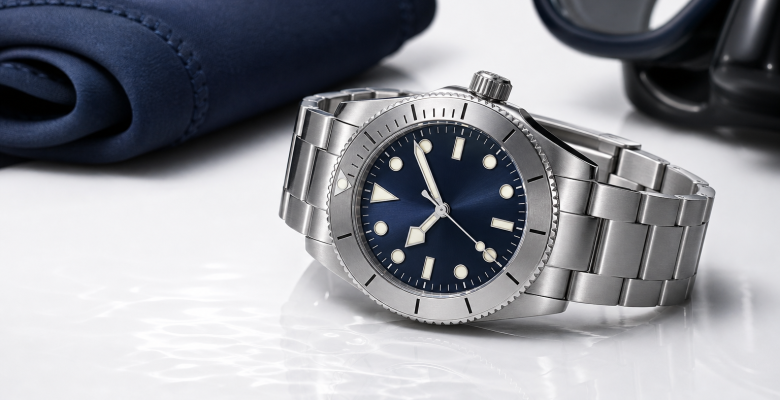
In short
A dive watch should match the water activity, not just the look. Start with the stated water-resistance rating and, for scuba use, evidence of ISO 6425 compliance; then compare timing, legibility, fit, movement, and condition before using live marketplace filters to build a shortlist.
- ISO 6425:2018 applies to divers' watches designed for depths of at least 100 meters and requires a secured system for measuring dive time that remains visible in darkness.
- A water-resistance number alone does not tell a buyer whether a watch has been tested and marked as a divers' watch under ISO 6425.
- The best dive watch for daily wear is usually the one that fits comfortably, has an easy-to-read dial, and meets the water use actually planned.
- For pre-owned dive watches, the original rating and the watch's present condition are separate questions worth checking before water use.
Contents
- What separates a dive watch from a water-resistant watch?
- What water-resistance rating should you choose?
- Which features make a dive watch easier to use?
- Should you choose an automatic or quartz dive watch?
- What size and strap make sense for everyday wear?
- Which dive watch category fits how you will use it?
- How do you find current dive watch listings?
- Frequently asked questions
- What should you do before buying?
A good dive watch is a practical sports watch first and a style choice second. That order makes comparison simpler: decide where the watch will go, write down the features that cannot be compromised, then compare listings without being distracted by a colorway or a famous silhouette.
What separates a dive watch from a water-resistant watch?
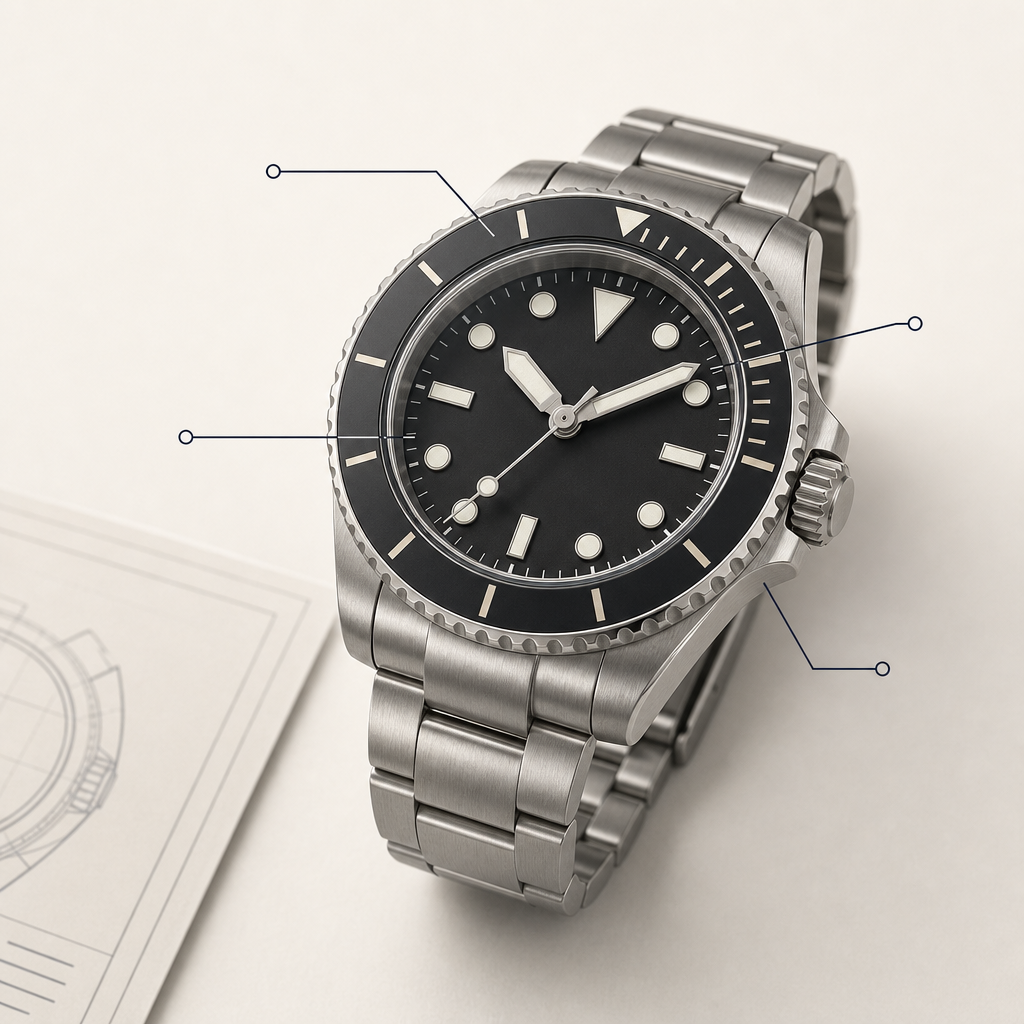
Water resistance is a case specification, while a divers' watch is a defined performance category. ISO 6425:2018 applies to divers' watches designed for depths of at least 100 meters and calls for a secured system to indicate dive time that can be read in darkness. (iso.org)
A watch can look like a dive watch without being marketed or tested as one. A bold dial, large hands, a metal bracelet, and a rotating bezel are useful visual cues, but they do not replace the manufacturer's stated rating, instructions, or evidence that the watch meets a diving standard.
The distinction matters most when water use is part of the purchase decision. ISO explains that ISO 22810 covers water-resistant watches intended for daily use and swimming, while ISO 6425 covers watches that can be used while scuba diving. (iso.org)
For actual diving, buy the specification before the style.
What water-resistance rating should you choose?
Choose the rating after deciding whether the watch is for ordinary daily exposure, swimming, or scuba diving. If scuba use is non-negotiable, screen out watches below 100 meters and look for a clear statement of ISO 6425 compliance or equivalent manufacturer documentation.
A higher depth marking can be useful, but the number alone does not establish that a particular watch was tested and marked as an ISO 6425 divers' watch. Start with the intended use, then read the maker's current guidance for that exact reference rather than assuming every water-resistant watch is suitable for the same activity.
For everyday wear or swimming, a water-resistant watch may be sufficient. ISO's water-resistance guidance separates these uses from scuba diving, so buyers should not treat the terms as interchangeable. (iso.org)
For a pre-owned watch, add condition to the decision. Ask when the water resistance was last tested, whether the crown and caseback seals were assessed, and whether the seller recommends water use. A watch's original design rating does not remove the need to understand its present condition.
The right rating is the one that matches the water activity planned, with proof that the individual watch is ready for it.
Which features make a dive watch easier to use?
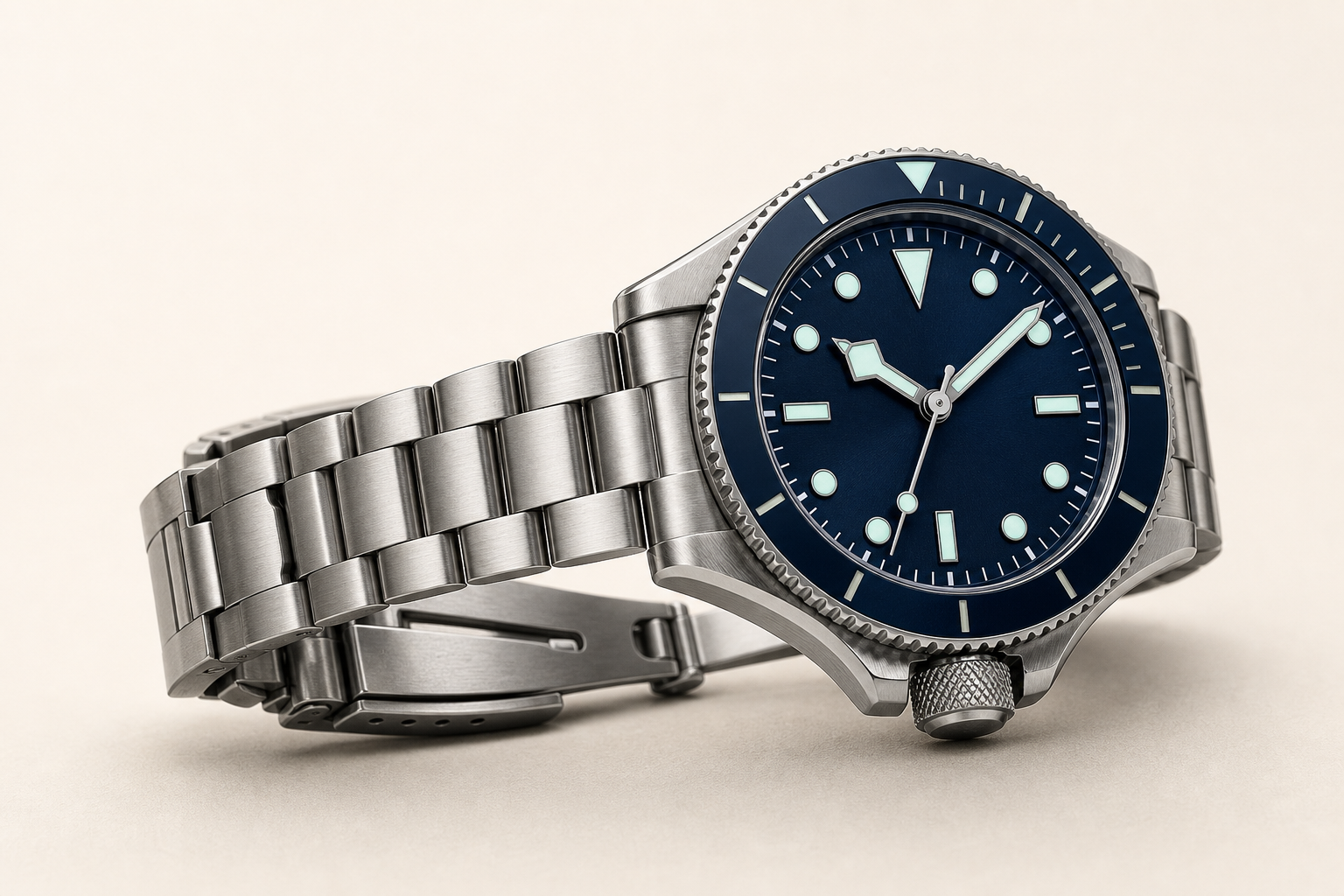
The useful features are the ones that make elapsed time and the current time easy to read under pressure, glare, or low light. Prioritize a timing system, clear minute indication, strong contrast, and controls that remain manageable on the wrist.
Elapsed-time system. A rotating bezel is the familiar solution. Align its reference marker with the minute hand at the start of an interval, then read elapsed minutes against the scale. ISO 6425 requires a secured system for indicating dive time, not a particular visual style. (iso.org)
Legibility. Look for hands that stand apart from each other, a visible minute track, and luminous material that supports low-light reading. The current ISO 6425 standard specifically includes visibility in darkness among its requirements. (iso.org)
Crown and case controls. A crown that is easy to grasp is convenient, but it should sit comfortably against the wrist. Do not operate the crown or pushers in water unless the manufacturer explicitly permits it for that watch.
Crystal and bezel material. Scratch resistance and impact resistance are separate properties. Rather than treating a material name as an automatic upgrade, inspect photographs for condition, ask about replacement parts, and decide whether the watch will be used as a daily tool or collected more carefully.
Bracelet or strap. A bracelet offers a familiar all-purpose option. Rubber and fabric straps can reduce weight and dry faster, but comfort, clasp security, and the ability to adjust the fit matter more than the label on the material.
A dive watch is easier to live with when time, minute hand, bezel, and controls are all easy to use at a glance.
Should you choose an automatic or quartz dive watch?
Choose automatic when the mechanical experience and regular wear are part of the appeal. Choose quartz when simple set-and-go use, a lighter routine, or a practical backup watch matters more than mechanical tradition.
Automatic dive watches suit buyers who enjoy the movement itself and are prepared to set the time after the watch has stopped. They also offer a broad range of case designs and price points, but water capability comes from the case construction and condition, not from automatic winding.
Quartz dive watches make sense for travel, occasional wear, or an uncomplicated activity watch. A battery-powered movement does not make a watch less capable in water; the relevant questions remain the stated water resistance, the timing system, legibility, and maintenance of the case seals.
Do not make movement the first filter unless it is genuinely non-negotiable. Start with the water use and fit, then select the movement that makes ownership enjoyable.
Movement choice is personal; water suitability depends on the watch's construction, rating, and current condition.
What size and strap make sense for everyday wear?
A dive watch needs enough presence to be read quickly, but it should not slide, pinch, or snag during ordinary movement. Case diameter is only one measurement, so compare lug-to-lug length, thickness, bracelet taper, and clasp shape as well.
If a watch will be worn every day, measure a watch that already feels right on the wrist and use it as a reference. Buyers often focus on diameter, then discover that case length or thickness changes the wearing experience more than expected.
A metal bracelet offers flexibility for most settings, while rubber or fabric can make a substantial case feel less formal and less heavy. For swimming or travel, confirm that the strap and buckle are in sound condition, especially when considering a pre-owned listing.
Fit is a specification, not a finishing detail, because an uncomfortable dive watch is unlikely to be worn.
Which dive watch category fits how you will use it?
There is no single best dive watch category. The better choice is the one whose requirements fit the watch's real job, whether that is daily wear, swimming, serious diving, travel, or collecting.
Use this matrix to decide which filters belong at the top of a marketplace search.
| If the watch is mainly for | Put these requirements first | Check before committing |
|---|---|---|
| Daily wear with occasional water exposure | Comfortable fit, readable dial, stated water resistance, strap or bracelet condition | Case thickness, clasp comfort, service history |
| Swimming and active travel | Manufacturer guidance for the planned activity, secure fit, legibility, current seal condition | Crown position, recent water-resistance assessment |
| Scuba diving | At least 100 meters, stated ISO 6425 compliance, elapsed-time system, low-light readability | Exact reference documentation and present condition |
| Mechanical collecting | Reference accuracy, movement preference, original components, overall condition | Service records, replacement parts, water-use expectations |
| Low-maintenance backup use | Quartz movement, clear display, comfortable strap, practical stated rating | Battery condition and whether water resistance was recently assessed |
For scuba use, the 100-meter threshold and dive-time visibility come directly from ISO 6425:2018. (iso.org)
A useful category choice turns vague preferences into filters that remove poor fits quickly.
How do you find current dive watch listings?
Start broad, then add only the filters that are truly essential. On DreamChrono's Buy Watches marketplace, buyers can narrow current listings by technical details such as water resistance, case characteristics, movement, functions, brand, collection, and reference.
Avoid filtering every preference at once. Begin with the intended use, a comfortable size range, and water resistance; then compare the remaining listings for movement, bezel style, dial layout, strap, and condition. This approach leaves room for watches that satisfy the important requirements even if a listing uses different descriptive language.
When a specific model is already known, use the reference number first. A reference is generally more precise than a collection name because collections may include multiple sizes, dial variants, materials, movements, and generations.
Before contacting a seller about a pre-owned dive watch, ask for the exact reference, clear condition photographs, service information, included accessories, and any available information on recent water-resistance testing. For a watch intended for real water use, an independent assessment of seals and water resistance may be sensible before the first swim or dive.
Ready to shortlist options? Open DreamChrono's Buy Watches marketplace, begin with water resistance and case size, then save the listings that meet the three requirements that matter most to you.
Live listings are most useful when the search filters reflect how the watch will actually be worn.
Frequently asked questions
Can I swim with a dive watch?
A dive watch and a water-resistant watch are not automatically the same thing. ISO states that ISO 22810 covers water-resistant watches for daily use and swimming, while ISO 6425 covers watches intended for scuba diving. Check the maker's current instructions, confirm the crown is fully secured, and consider the watch's present condition before swimming. (iso.org)
Does a 100-meter rating mean a watch is a proper dive watch?
Not necessarily. ISO 6425:2018 applies to divers' watches designed for depths of at least 100 meters, but a depth rating by itself does not show that a maker tested and marked a particular watch to that standard. Look for a stated divers'-watch standard, a secured timing system, and low-light readability. (iso.org)
Do dive watches need a rotating bezel?
A rotating bezel is a common and practical way to read elapsed time, but the ISO 6425 standard does not require one specific bezel design. It requires a secured system for indicating dive time and visibility in darkness. For everyday wear, choose the timing layout that is easiest to read and operate. (iso.org)
Should I buy an automatic or quartz dive watch?
Buy an automatic dive watch if the mechanical movement is part of the enjoyment and regular setting does not bother you. Buy quartz if you want straightforward timekeeping for travel, occasional use, or backup duty. Neither movement type replaces the need to check water resistance, legibility, fit, and condition.
The deciding question is not which type is more prestigious, but which watch best fits the work it will actually do.
What should you do before buying?
Write down three non-negotiables before opening any listing: the deepest water activity planned, the size that wears comfortably, and whether automatic or quartz is preferred. If scuba diving is one of those non-negotiables, add stated ISO 6425 compliance and recent condition evidence to the list.
That short checklist is enough to turn a large field of dive watches into a shortlist worth examining closely.