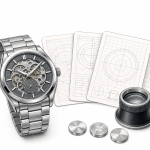
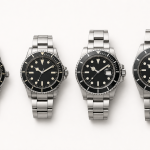
A watch reference number lookup starts with the code that identifies a model or configuration, then checks that result against the watch’s visible features. A serial number may help research one individual watch or production period, but neither number alone proves authenticity, ownership history, condition, or market value.
Key takeaways
A reference number is usually the best starting point for identifying a watch model, while a serial number usually relates to an individual watch or production sequence.
Copy every character exactly, including letters, zeros, separators, and suffixes, before searching a watch database or manufacturer material.
A likely reference match should agree with the watch’s case, dial, movement, functions, and bracelet or strap configuration before it is treated as a useful identification.
A model database can narrow the research, but it cannot authenticate an individual watch, confirm it is not stolen, or establish its value.
A reference number lookup works best as a process, not a one-line search. Start with the marking you can read, search for the most likely model record, then test the result against the physical watch rather than assuming that a close-looking database entry is conclusive.
What is a watch reference number, and how is it different from a serial number?
A watch reference number identifies a model or a defined configuration within a collection. A serial number, where a maker uses one, is tied more closely to an individual watch or production sequence, so it answers a different research question.
The distinction matters because many searches go wrong at the first step. A reference can lead to model-level information such as the intended case size, material, movement family, functions, and dial or bracelet options. A serial may sometimes help establish an approximate production period, but serial formats and their usefulness differ by maker and era.
A catalog record describes what a model was made to be. It does not prove that every part on the watch in front of you is original, correct for the period, or in the condition claimed by a seller.
DreamChrono’s reference-data guidance makes the same separation: a model reference is for identifying a documented configuration, while a serial number is one clue about an individual watch. It also cautions that a database record cannot inspect components or certify authenticity. (dreamchrono.com)
A reference number identifies the model-level question, while a serial number may help investigate the individual-watch question.
Where should you look for the reference number?
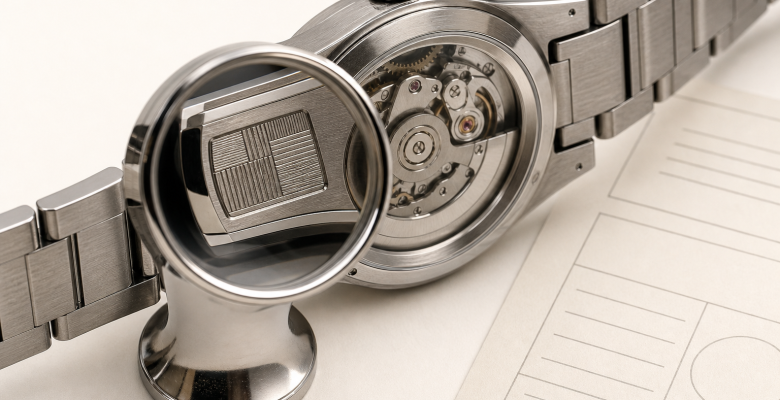
Look first at the places that can be inspected without forcing, opening, or damaging the watch. Depending on the maker, period, and construction, an identifying code may appear on the caseback, around the case, under a bracelet or strap, on paperwork, or inside the case.
Begin with the watch’s documents and any original packaging. A warranty card, invoice, service receipt, or product booklet may show a reference in a clearer format than a worn engraving. Treat documents as supporting evidence, however, not as proof that every component currently fitted to the watch is correct.
Next, photograph all visible markings in good light. Take one wide photo showing the location and one close, square-on image of the code. Do not rely on memory or type a code from a blurred image. The difference between an O and a zero, an I and a one, or a missing suffix can lead to a completely different result.
Avoid opening a case just to search for a code. Internal markings and movement numbers can be useful, especially on older watches, but opening a watch risks cosmetic damage, compromised water resistance, or loss of a small part. If the information is essential, a qualified watchmaker can record it during an appropriate inspection or service.
A careful photograph and exact transcription are more useful than a rushed search based on a guessed character.
How do you do a watch reference number lookup?
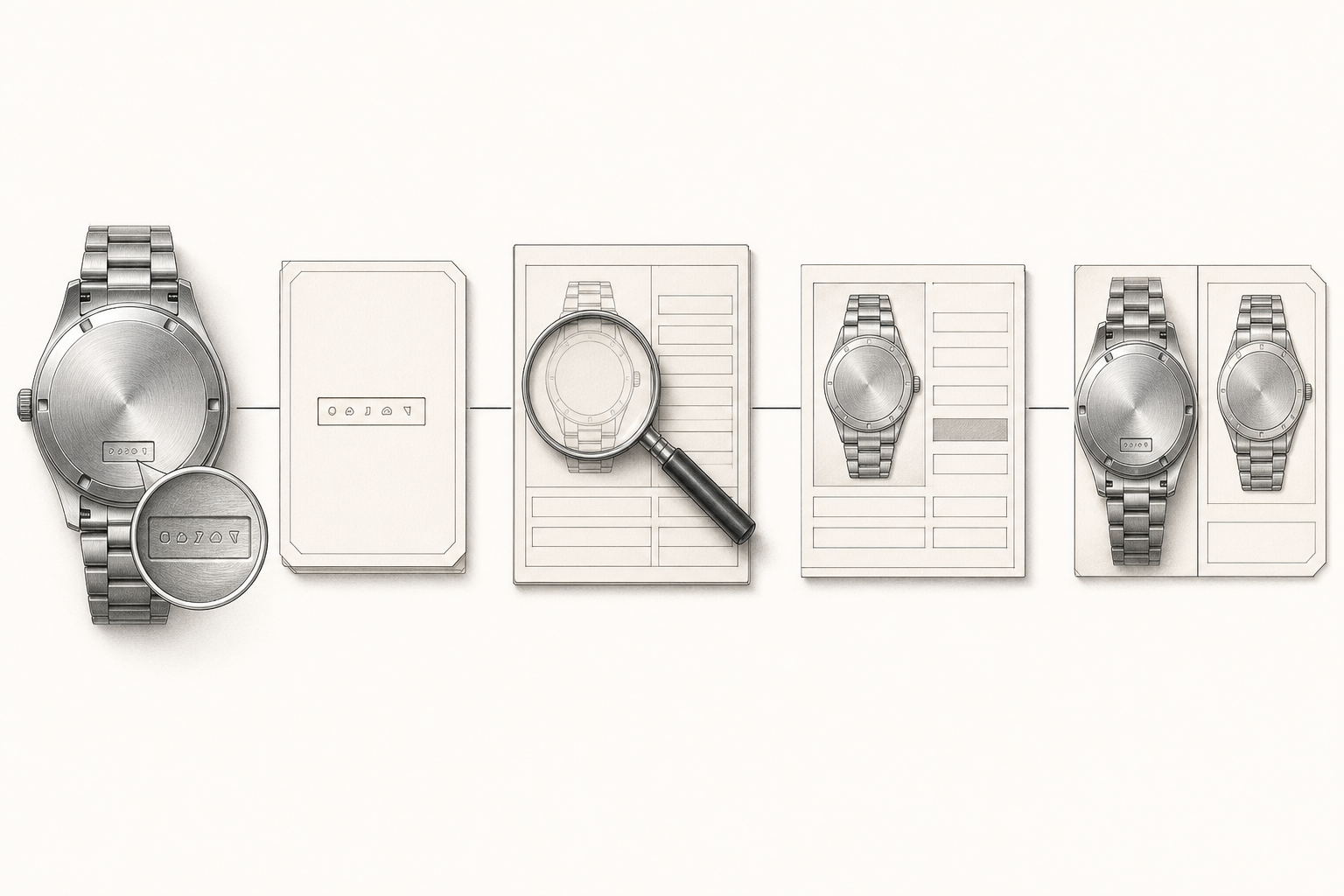
A reference lookup should move from exact transcription to physical comparison.
A reliable watch reference number lookup moves from exact information to broader comparison. The goal is to build a defensible shortlist, not to force the first search result to fit.
Record the code exactly. Copy the visible characters, punctuation, and suffixes. Keep any uncertainty visible by writing 8/B or 0/O rather than silently choosing one character.
Search the complete reference first. Use the maker’s own material where it is available. A structured watch database is useful when official archives are incomplete, difficult to search, or no longer list an older model.
Try controlled variations. If an exact search fails, remove only obvious spaces or punctuation. Do not remove suffixes at random, because they can distinguish materials, dial variants, bracelets, or regional configurations.
Search by brand and collection when the code is partial. Add observable features one at a time: case shape, diameter, material, number of subdials, date position, bezel type, movement category, or bracelet style.
Save the candidate record and test it. A result is useful only if its documented features match the watch. If two key details conflict, keep looking rather than explaining the mismatch away.
For model research, DreamChrono’s Watches Database is designed to search by reference, brand, and collection. Its dealer documentation also describes searching by reference or by brand and collection to pre-fill technical specification fields, which is useful evidence that the reference-data layer is organized around model identification rather than individual-watch certification. (dreamchrono.com)
The best lookup result is a candidate model record that survives comparison with the physical watch.
What should you compare after finding a likely match?
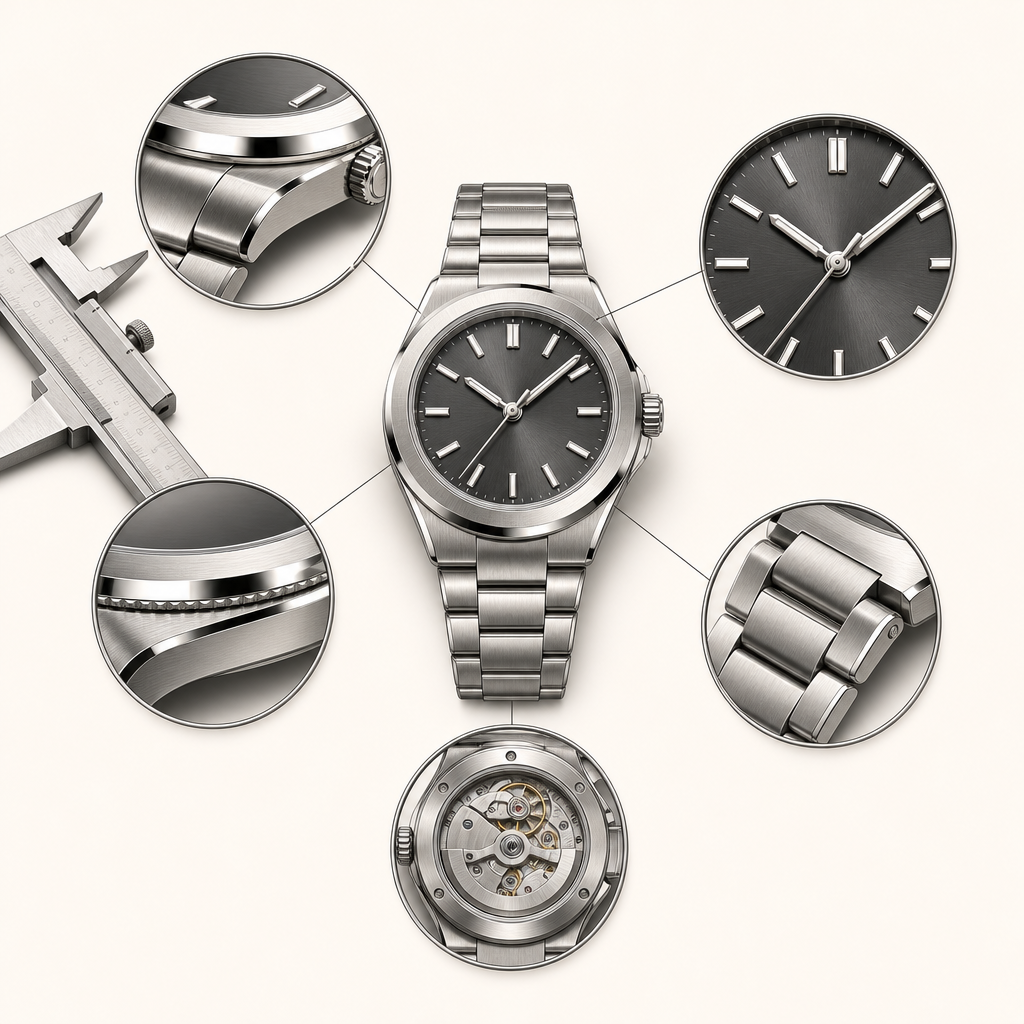
Compare several features before treating a reference match as reliable.
A model name is not enough. Compare the likely reference against several physical and technical details, because related references can share a collection name while differing in size, material, movement, dial, bezel, or bracelet.
Use this comparison note:
Case: shape, diameter, thickness if known, material, and caseback design.
Dial: color, markers, logo layout, date window, text, and subdial arrangement.
Bezel and crystal: fixed or rotating bezel, scale type, insert material, and crystal description where documented.
Movement and functions: mechanical or quartz, caliber if visible, chronograph, date, second time zone, power reserve, or other complications.
Bracelet or strap: original bracelet reference where known, clasp type, end links, and whether the database record describes a strap instead.
Period details: production generation, dial variation, or movement revision when the record identifies one.
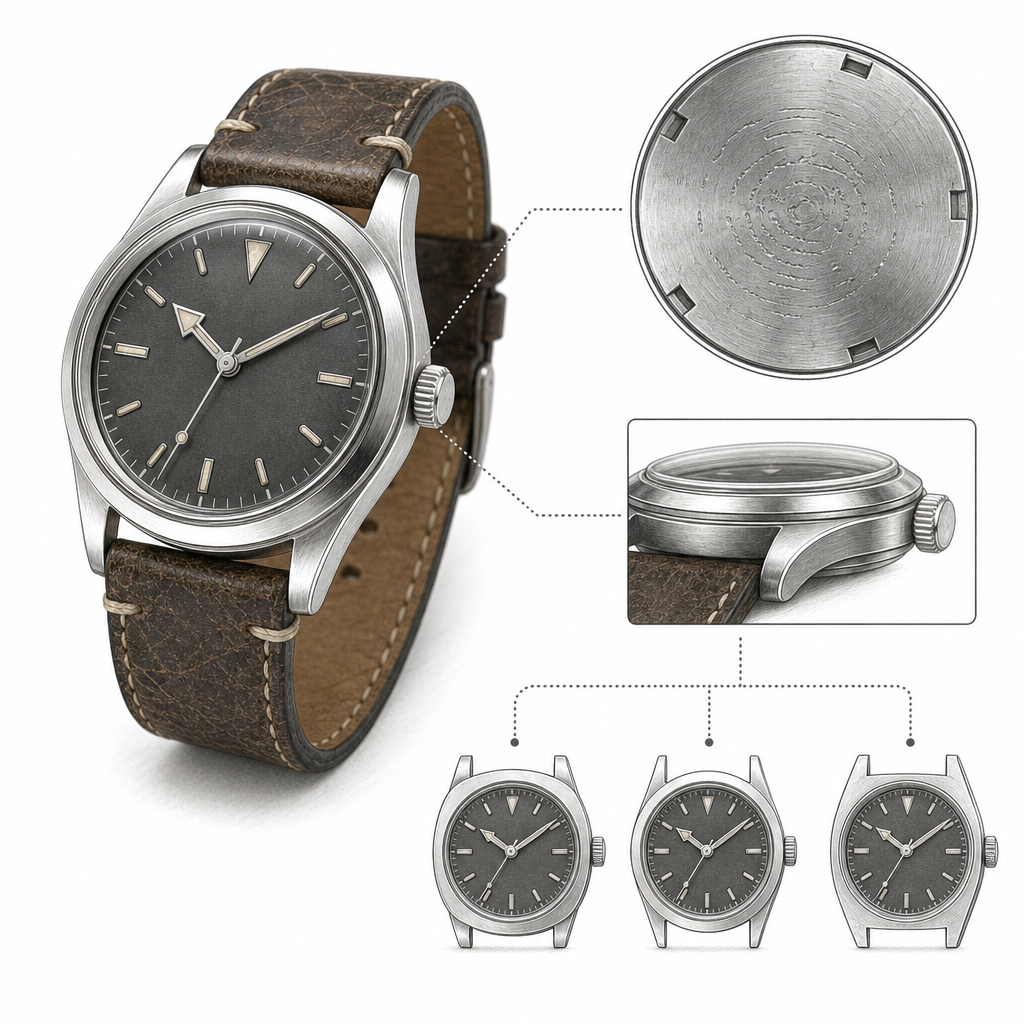
A mismatch does not automatically mean a watch is counterfeit. It may point to a service replacement, a later strap, a regional variation, an incomplete database record, or a watch that needs specialist review. The responsible conclusion is often “likely family, exact reference unconfirmed.”
A complete identification is a match across the watch’s important details, not a match on the collection name alone.
Can a reference number authenticate or date a watch?
No. A reference number can identify the model that a watch appears to represent, but it cannot authenticate the individual watch, verify its components, confirm its ownership history, or establish a current market value.
Authentication requires examination of the actual case, dial, movement, engravings, bracelet, and supporting evidence. A stolen-watch check is a separate search against a dedicated registry. Valuation is another separate task that depends on condition, originality, service history, completeness, market demand, and the terms of a specific sale.
Serial numbers have limits too. On some watches, published serial ranges may help narrow a production period. On others, serials are randomized, unavailable in public records, repeated across components, or too incomplete to support a reliable date. Never use an approximate date range as a claim of exact year of manufacture without maker documentation.
DreamChrono states that its Watches Database is a model-research resource, not a platform-operated authentication service, stolen-watch registry, or valuation tool. (dreamchrono.com)
A reference lookup makes the next verification step clearer, but it is never the verification itself.
What if no reference number is visible?
Partial evidence should produce a shortlist, not a guessed exact reference.
Start with the information you can verify and narrow the field gradually. A partial code, brand name, collection clue, dial layout, bezel, case shape, complication, or movement type can be enough to create a shortlist of plausible references.
Do not fill gaps with what seems likely. If a worn engraving looks like 12?45, search that partial string alongside the observable features, then keep several candidates until the case, dial, and technical details eliminate the wrong ones.
For a vintage watch, uncertainty is normal. Replaced dials, service parts, missing papers, polished cases, and undocumented regional variations can make a perfect database match impossible. Record what is confirmed, what is likely, and what remains unknown. That note will be far more useful to a seller, watchmaker, or specialist than a confident but unsupported reference number.
When a full reference is missing, a short list of plausible models is a better result than one forced identification.
Frequently asked questions about watch reference number lookup
Is the serial number the same as the reference number?
No. A reference number usually identifies a watch model or configuration, while a serial number usually identifies one individual watch or a production sequence. The terms are sometimes used loosely in listings, so compare the code with the maker’s documentation and the watch’s physical features before deciding which number you have. (dreamchrono.com)
Can I identify a watch by serial number?
Sometimes, but a serial number is usually less useful than a complete reference for identifying the exact model. A serial may help with an approximate production period or individual-watch records where the maker supports that research. Use it with the reference, visible configuration, paperwork, and any official documentation that is available.
Can I check a watch serial number online?
You can search a serial number online, but the quality of the result depends on the maker, era, and source. A public result may suggest a date range or show a reported issue, but it cannot replace inspection. Avoid publishing the complete serial number in public listings unless there is a clear reason to do so.
What should I do if I cannot find a reference number?
Create a shortlist using the brand, collection, dial layout, case shape, material, movement type, functions, and dimensions. Search a structured database by those details, then compare candidate records against photographs of the actual watch. If key characteristics still conflict, describe the reference as unconfirmed and seek qualified hands-on review.
The right lookup result gives you a documented model candidate and a clear list of details still needing verification.
What should you do next?
Start with the clearest code and build a comparison note before contacting a seller or making a purchase decision. When you have a full reference, a partial code, or a likely collection, use DreamChrono’s Watches Database to research candidate specifications, then compare those records with the watch and the individual listing.
A better question than “What watch is this?” is “Which documented reference best matches the evidence I can actually verify?”